AI on the Clock mehmeterkek.com

Nº 008 · PRODUCTIVITY · 31 August 2026

The AI Productivity Paradox: Why Adoption Isn't Showing Up in the Numbers

Record AI spending, real individual gains, limited enterprise impact — the same pattern Robert Solow named in 1987. What the productivity J-curve says about why the payoff takes longer than the rollout.
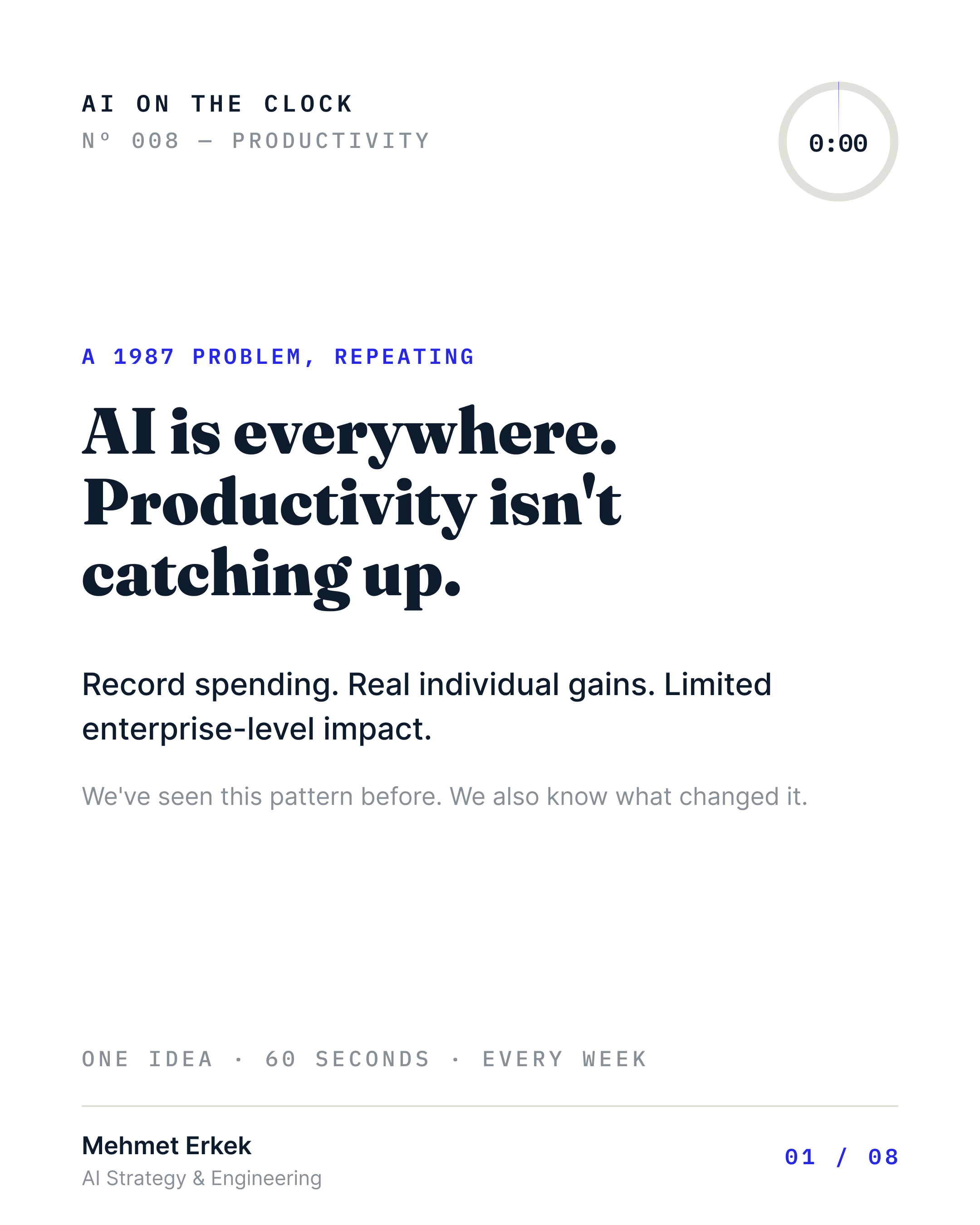
AI is everywhere. Productivity isn't catching up. Record spending, real individual gains, but limited enterprise-level impact—a 1987 problem repeating.
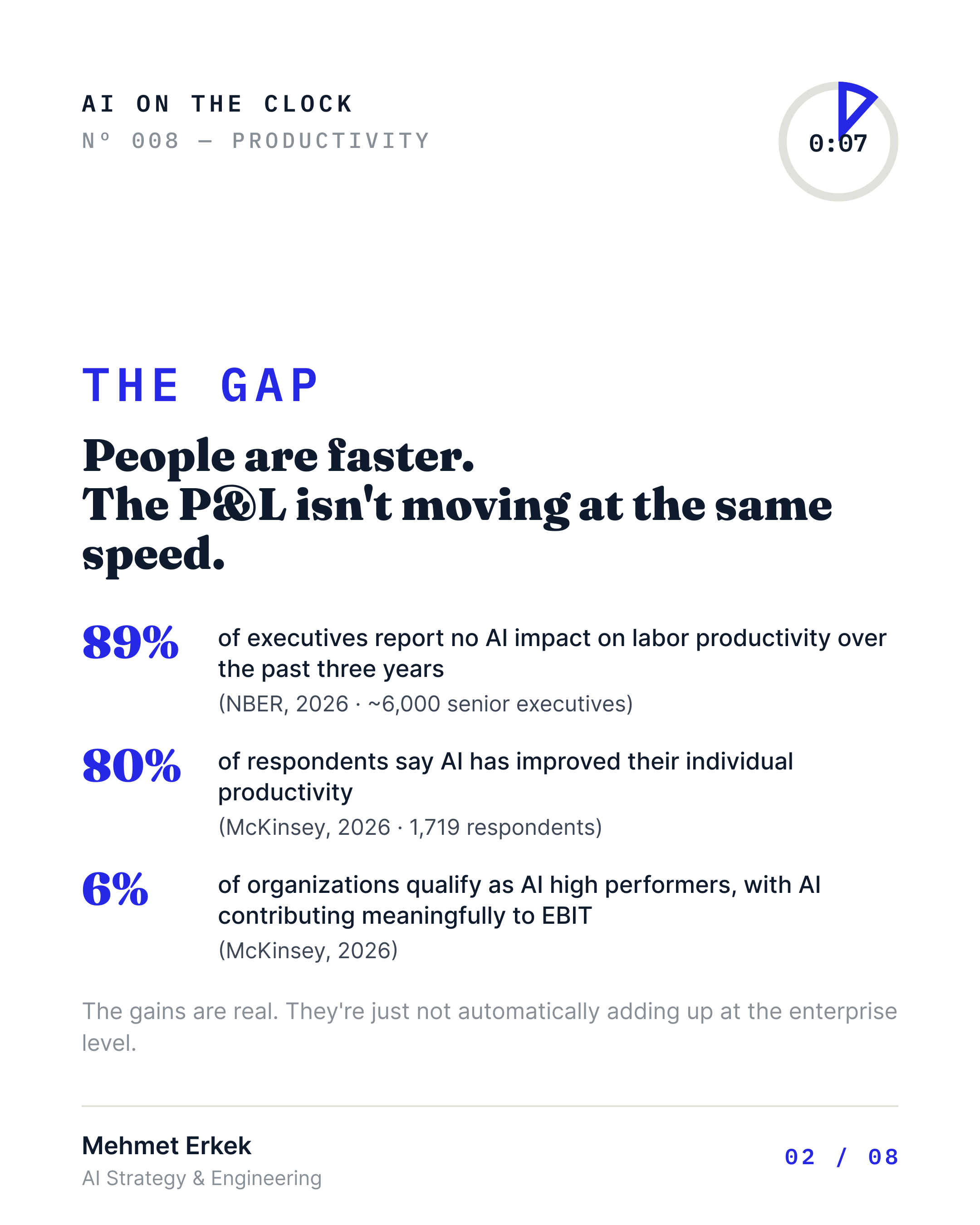
89% of executives report no AI impact on labor productivity in three years, while 80% of respondents say AI improved their individual productivity, and only 6% of organizations qualify as AI high performers with meaningful EBIT contribution.
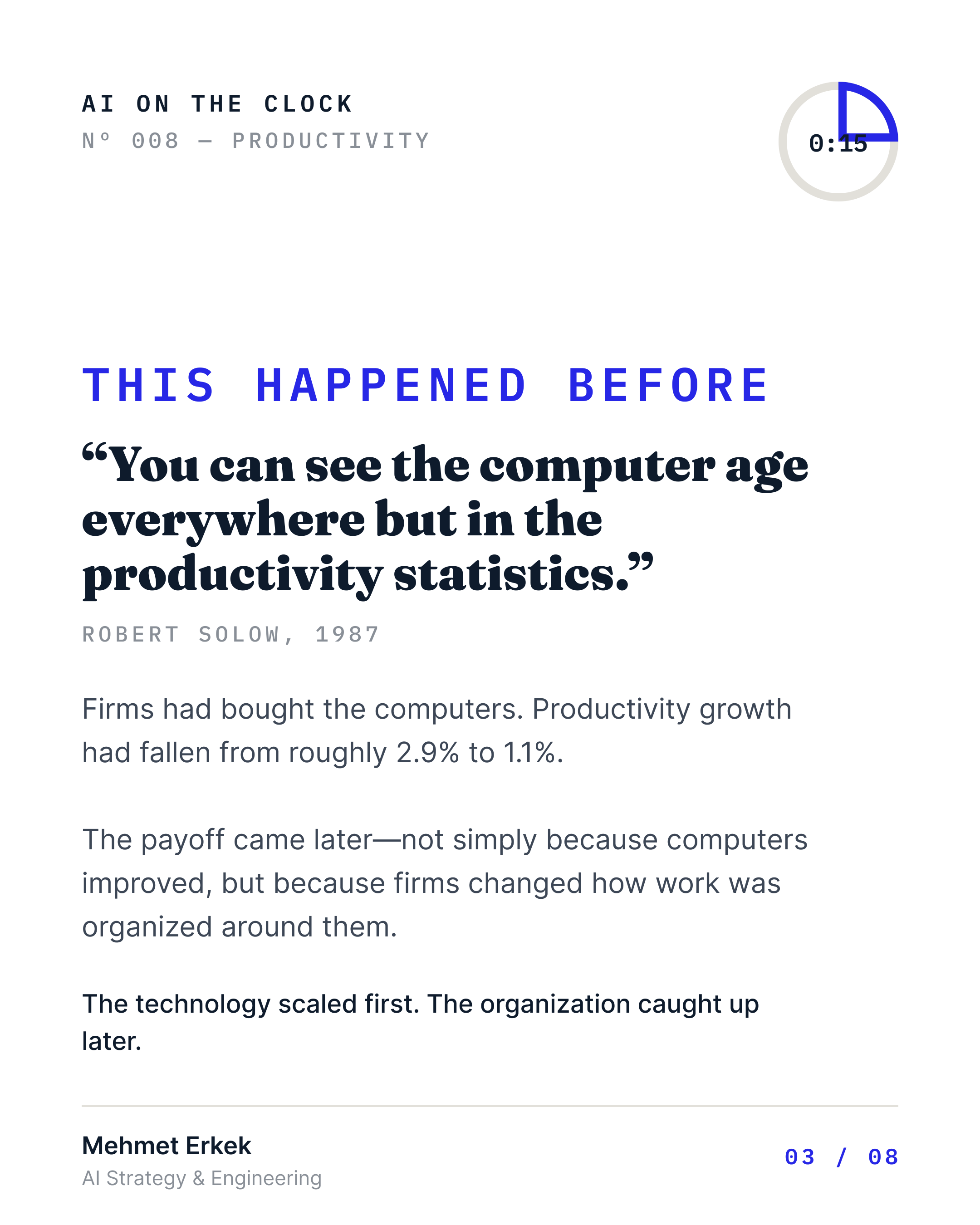
Robert Solow said in 1987: "You can see the computer age everywhere but in the productivity statistics." Firms bought computers but productivity growth fell from 2.9% to 1.1%. The payoff came later when firms redesigned work around the technology.
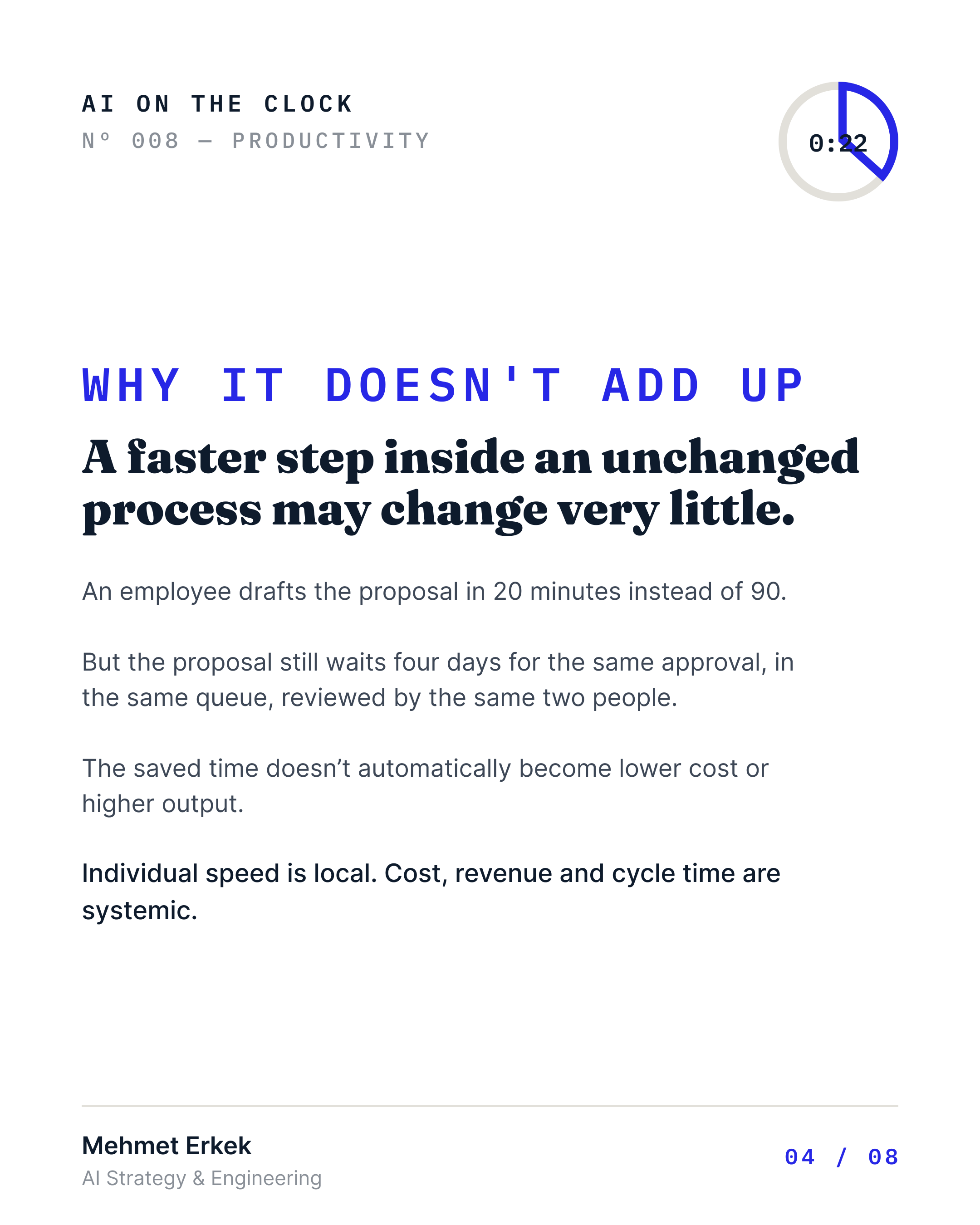
A faster step inside an unchanged process changes very little. An employee drafts a proposal in 20 minutes instead of 90, but it still waits four days for approval in the same queue. Individual speed is local; cost, revenue, and cycle time are systemic.
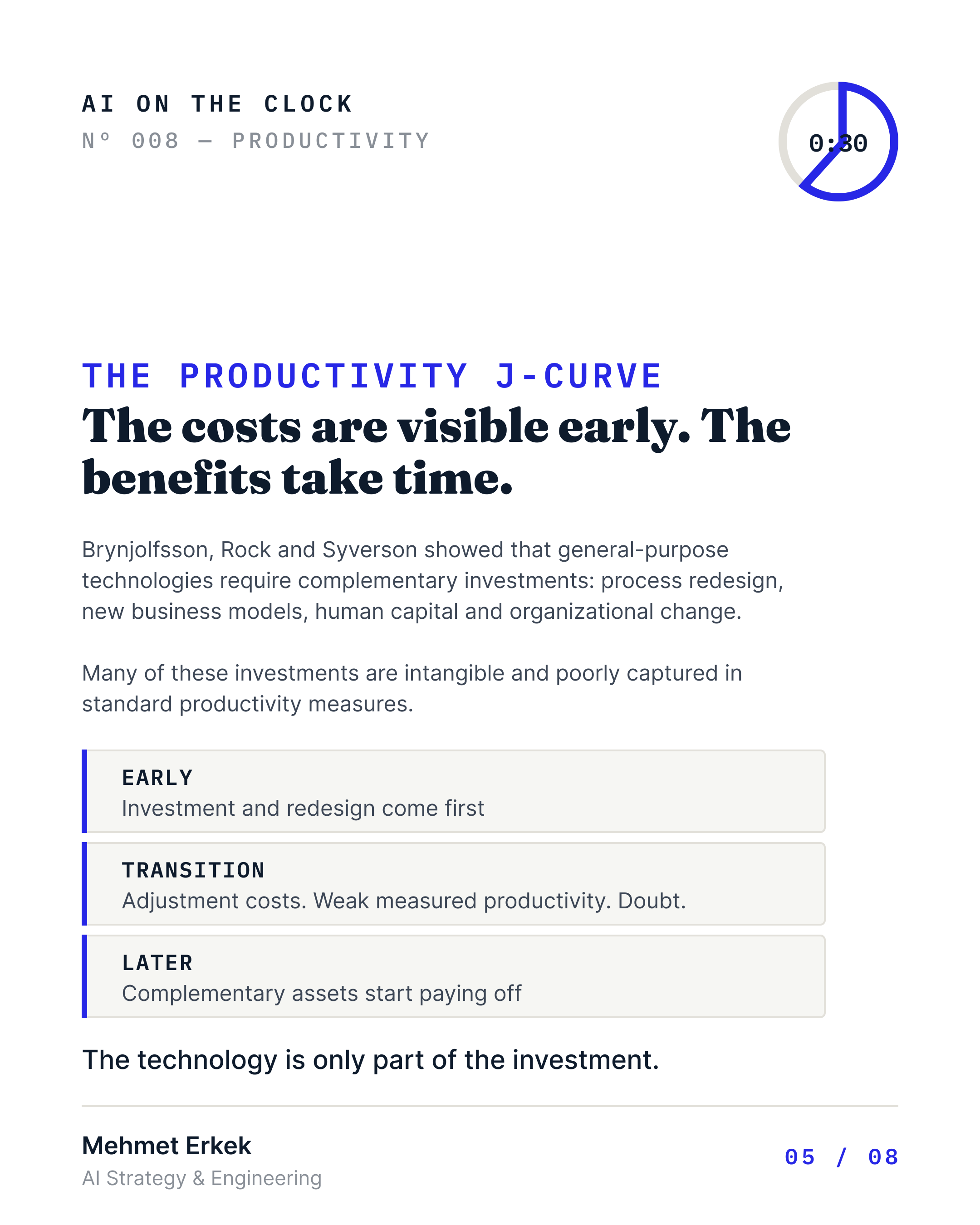
The productivity J-curve shows costs visible early, benefits later. General-purpose technologies require complementary investments in process redesign, business models, human capital, and organizational change—many intangible and poorly captured in standard measures.
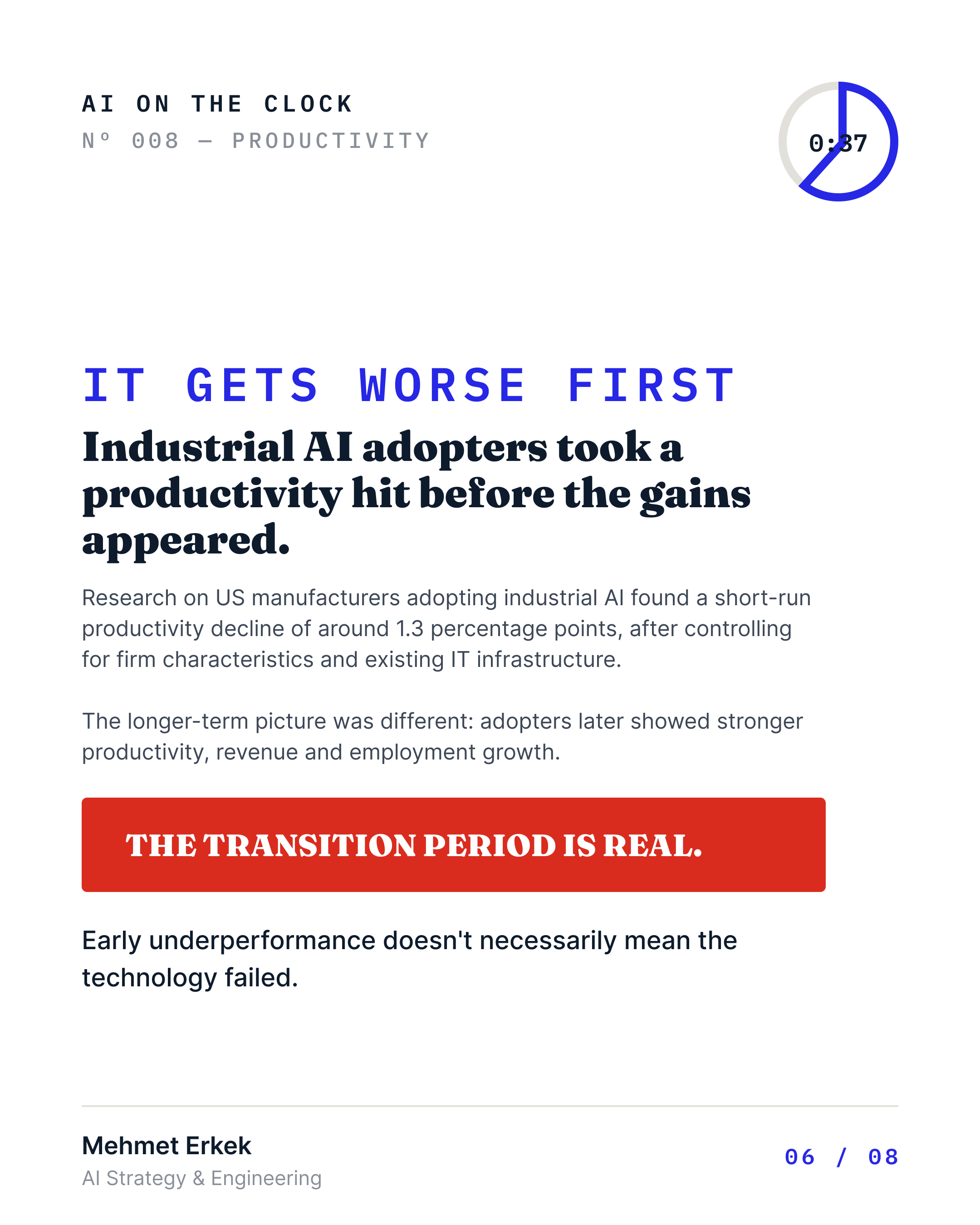
Industrial AI adopters took a short-term productivity hit of around 1.3 percentage points before later showing stronger productivity, revenue, and employment growth. The transition period is real; early underperformance doesn't mean the technology failed.
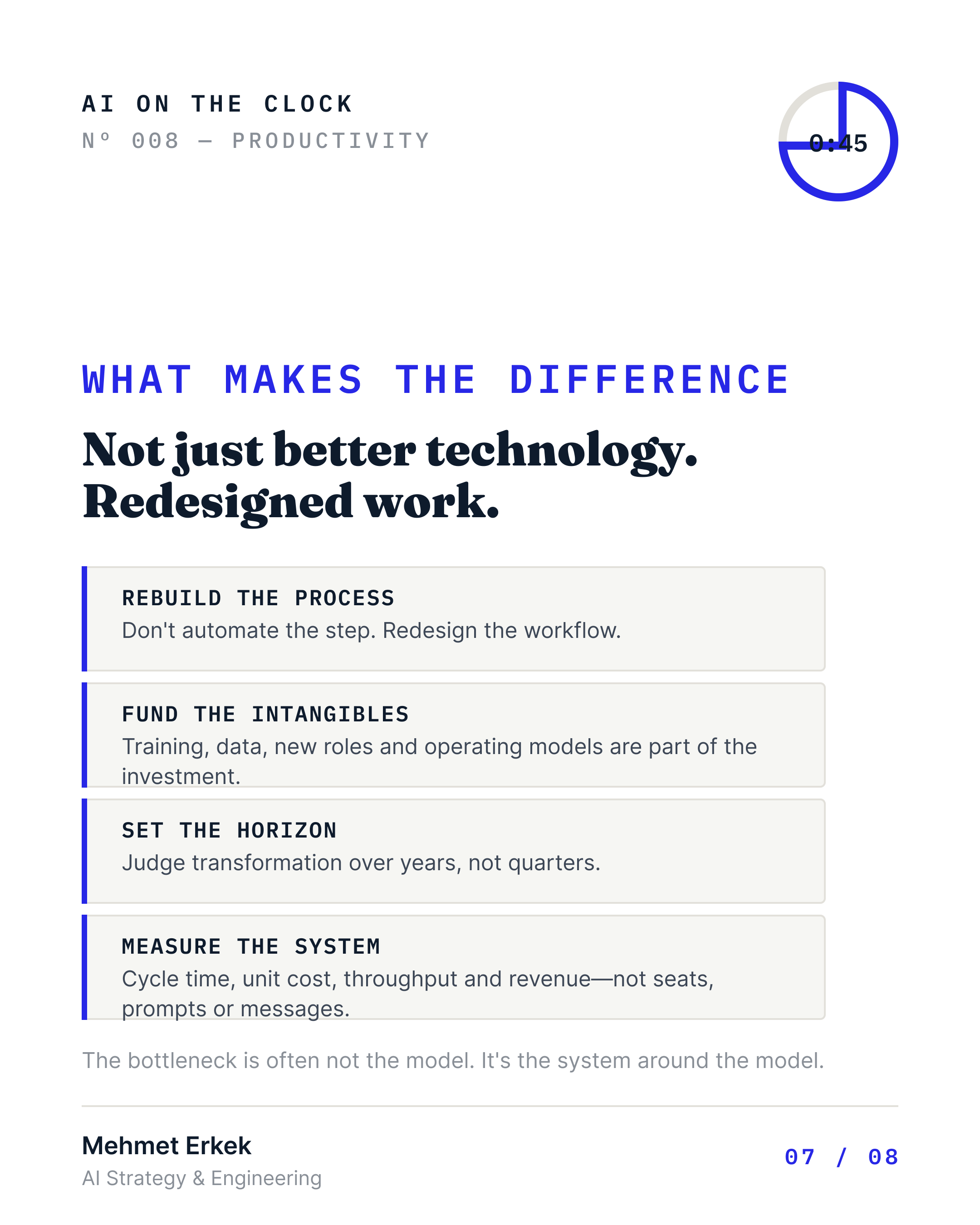
Four levers make the difference: rebuild the process, not just automate the step; fund intangibles like training and new roles; judge transformation over years, not quarters; measure the system—cycle time, unit cost, throughput, revenue—not individual tool usage.
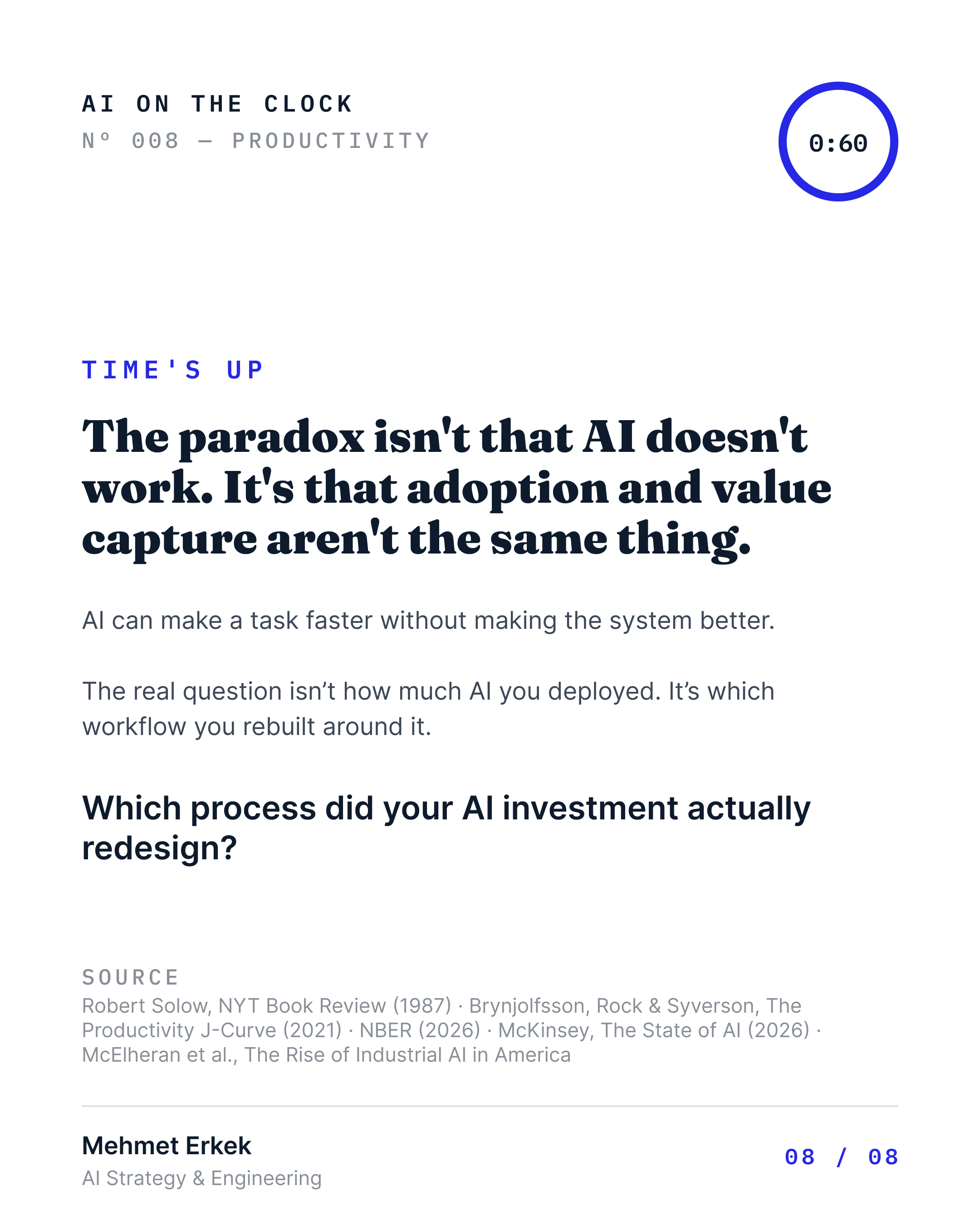
The paradox isn't that AI doesn't work; it's that adoption and value capture aren't the same. AI can speed a task without improving the system. The real question is which workflow your AI investment actually redesigned.

Download the deck (PDF, 8 pages)

AI is everywhere. Productivity isn't catching up. People are faster. The P&L isn't moving at the same speed.