AI on the Clock mehmeterkek.com

Nº 007 · GOVERNANCE · 24 August 2026

Human-in-the-Loop Isn't a Brake — It's How You Design Autonomy

Full autonomy or full manual is the wrong question. Three modes of human oversight, when to use each, and the four questions that decide how much rope to give your agents.
Human-in-the-loop isn't a brake. It's how you design autonomy.
The false binary: Full autonomy or full manual? Neither. Autonomy isn't a switch. It's a dial you set per decision — based on what happens when the agent is wrong.
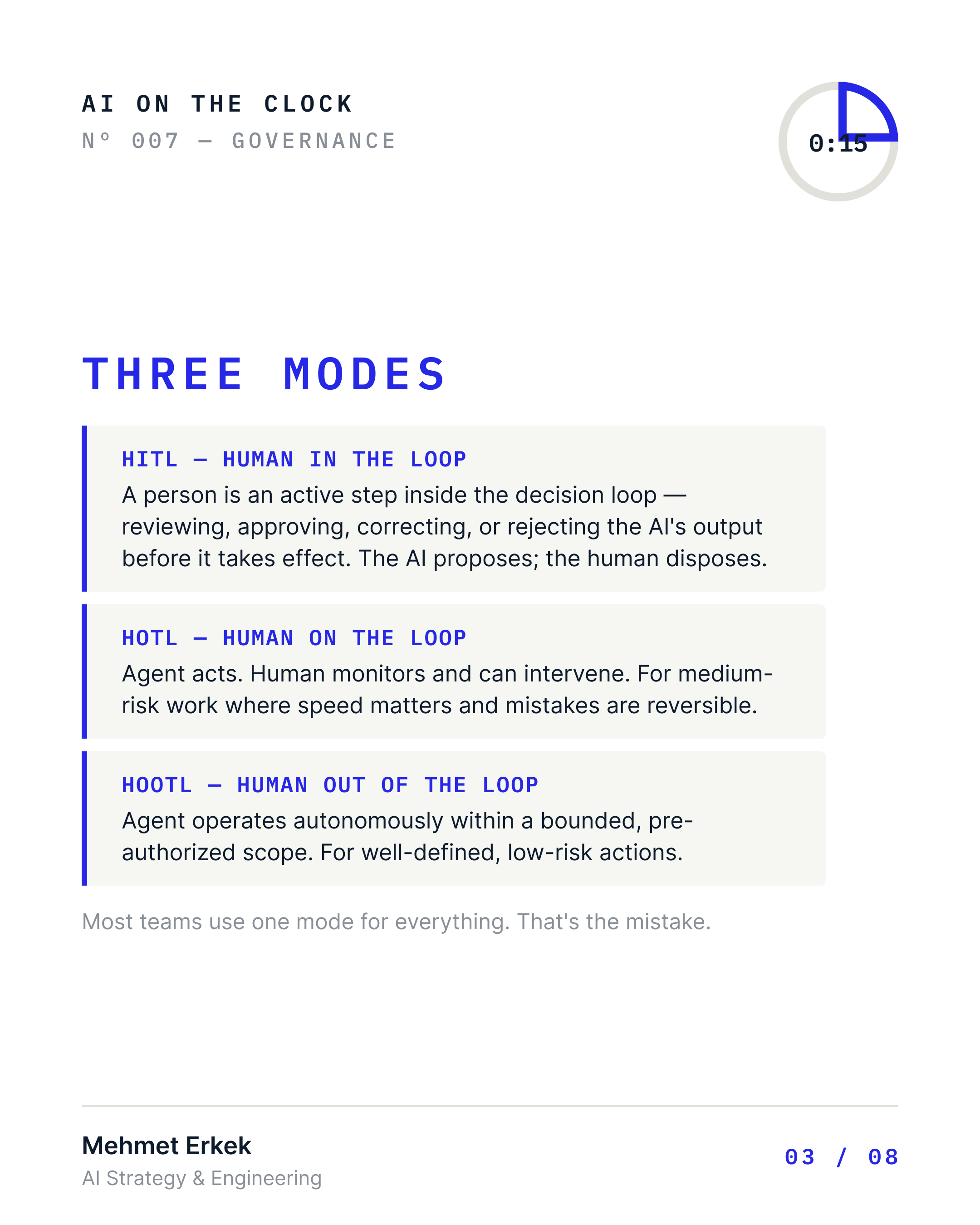
Three modes: HITL (human in the loop) where a person reviews and approves before the agent acts; HOTL (human on the loop) where the agent acts and a human monitors and can intervene; HOOTL (human out of the loop) where the agent operates autonomously within a bounded pre-authorized scope. Most teams use one mode for everything, which is the mistake.
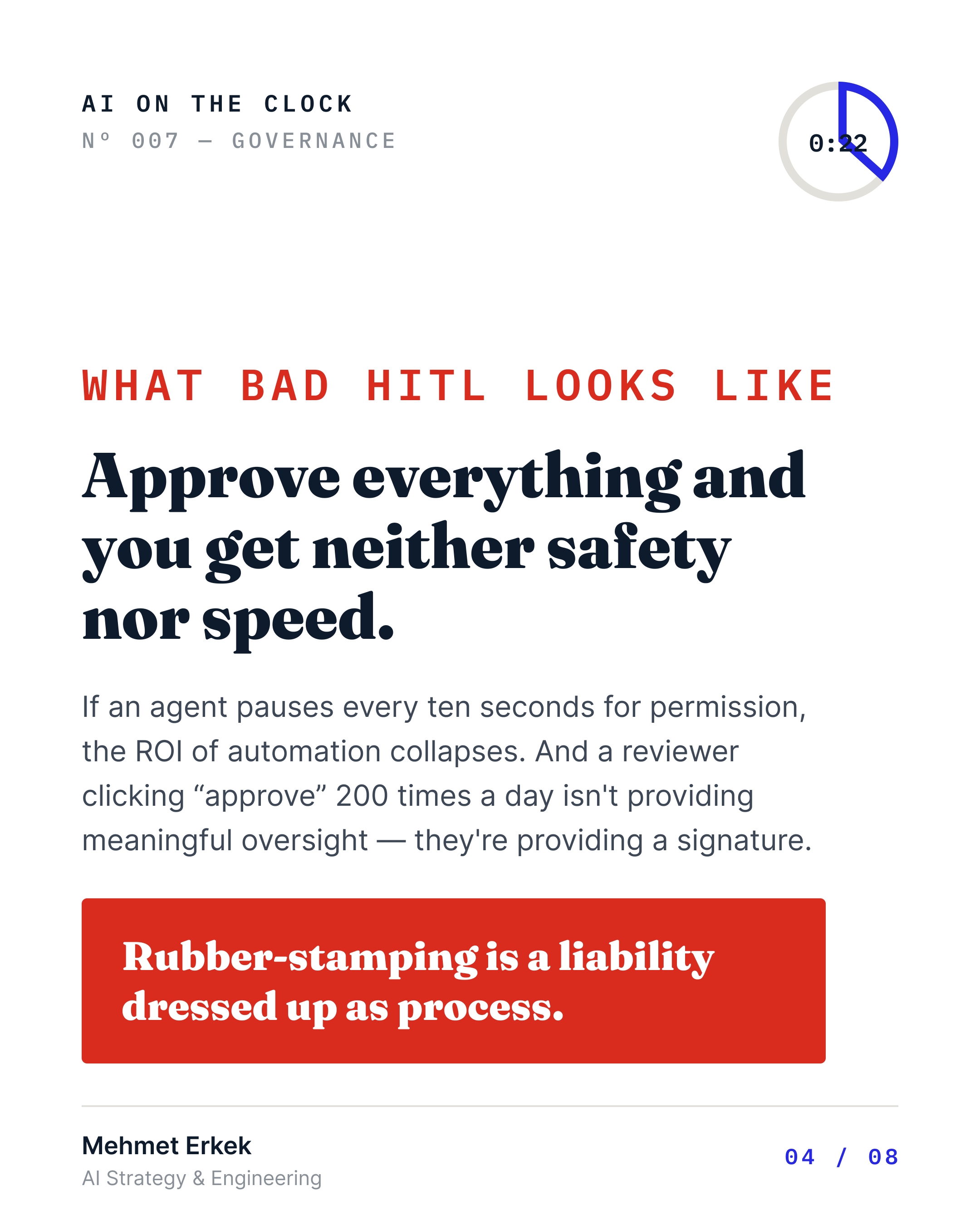
Bad HITL approves everything and gets neither safety nor speed. If an agent pauses every ten seconds for permission, automation's ROI collapses. A reviewer clicking approve 200 times daily provides a signature, not oversight. Rubber-stamping is a liability dressed up as process.
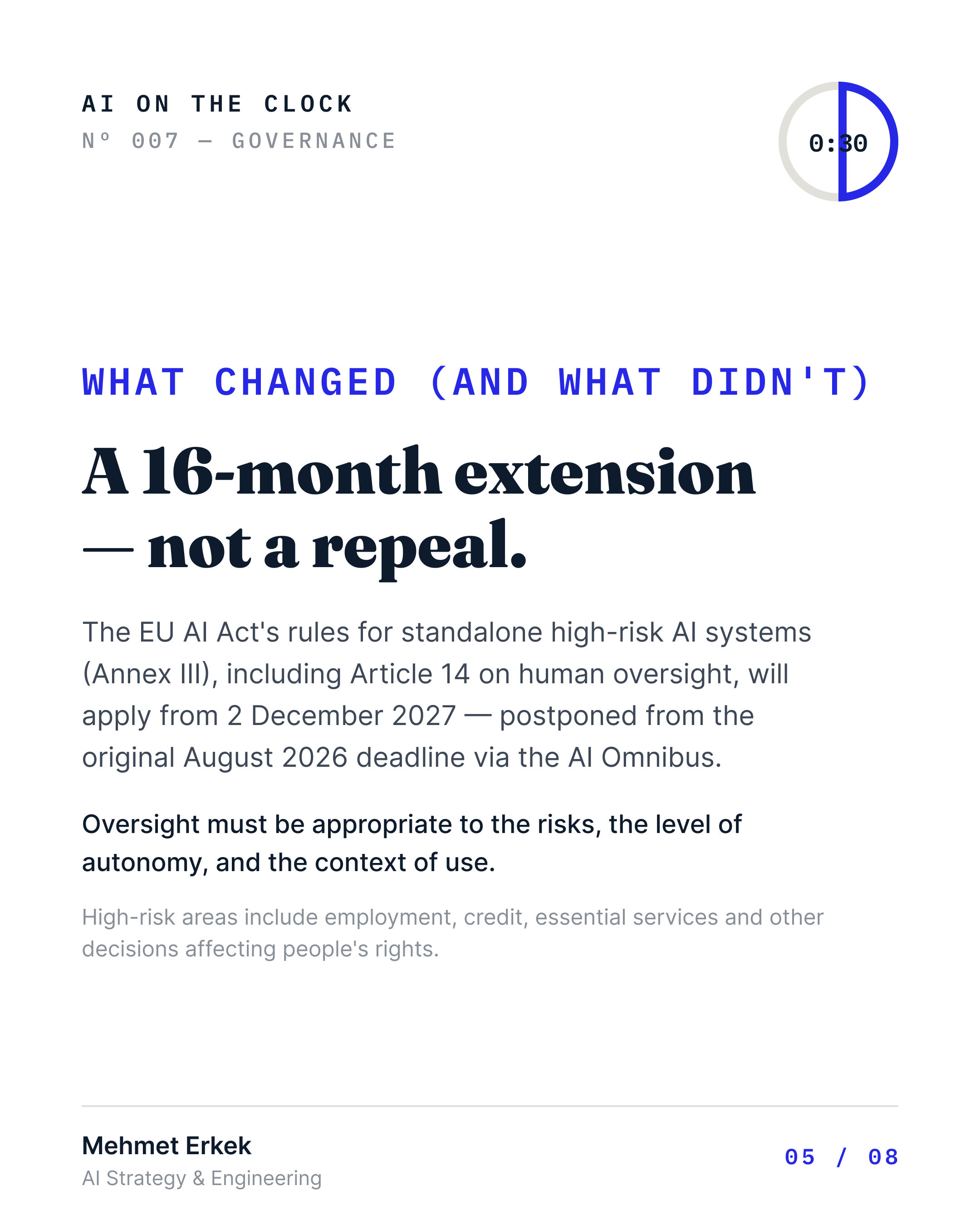
The EU AI Act's rules for high-risk AI systems including Article 14 on human oversight apply from December 2, 2027. Oversight must be appropriate to the risks, level of autonomy, and context of use. Oversights apply to high-risk areas like employment, credit, essential services, and decisions affecting people's rights.
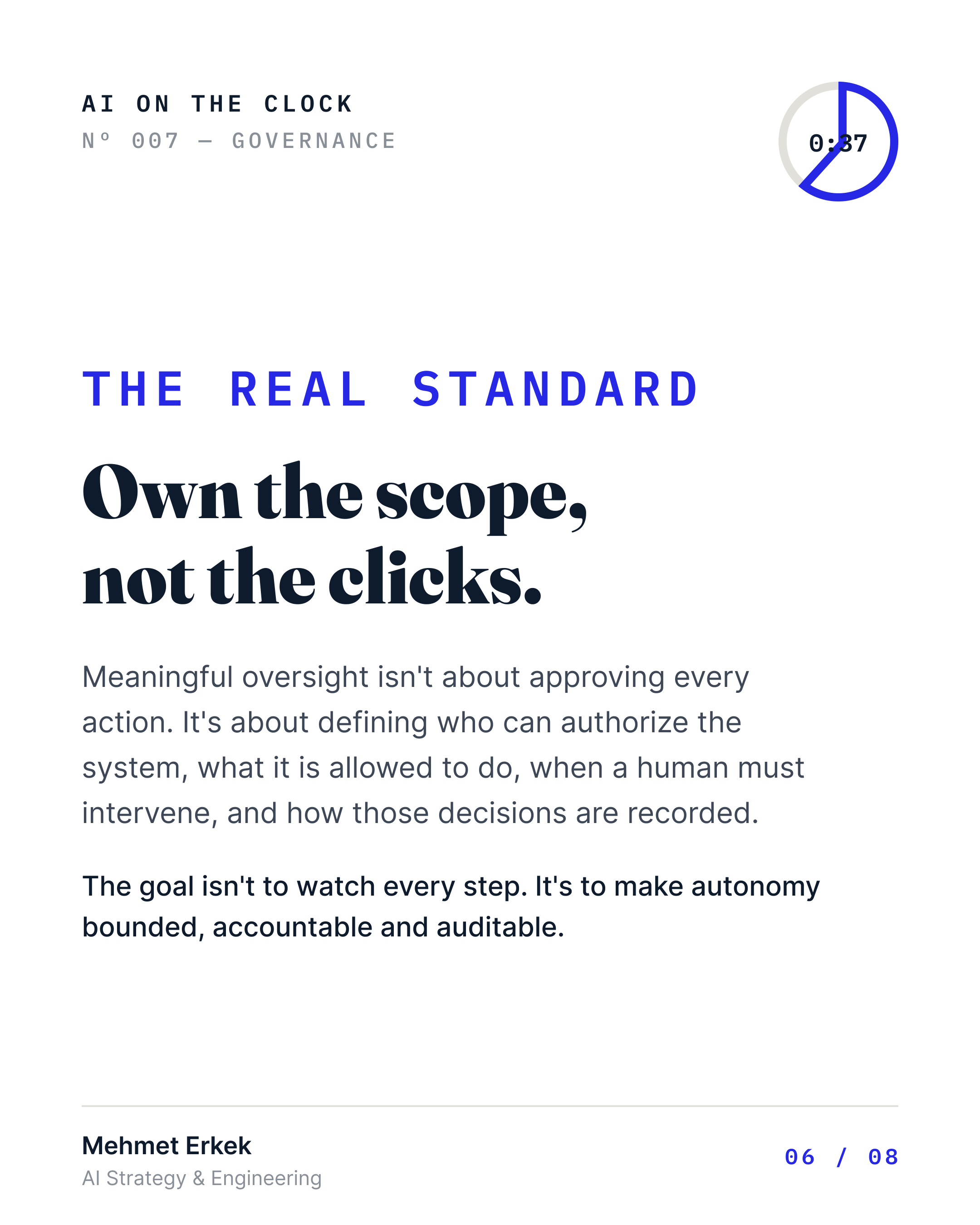
Own the scope, not the clicks. Meaningful oversight means defining who can authorize the system, what it's allowed to do, when a human must intervene, and how decisions are recorded. The goal isn't to watch every step. It's to make autonomy bounded, accountable, and auditable.
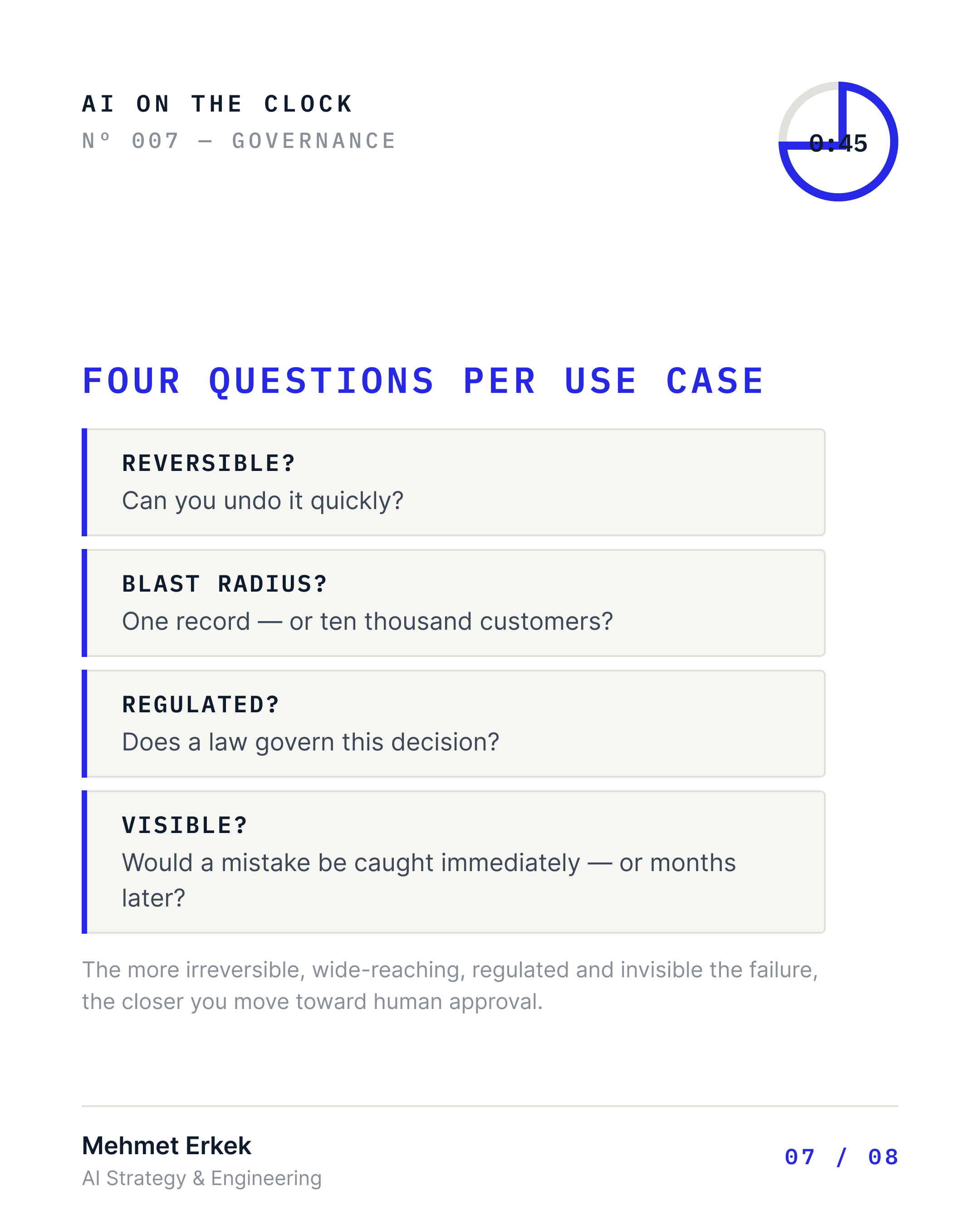
Four questions per use case: Is it reversible—can you undo it quickly? What's the blast radius—one record or ten thousand customers? Is it regulated—does a law govern this decision? Is it visible—would a mistake be caught immediately or months later? The more irreversible, wide-reaching, regulated, and invisible the failure, the closer you move toward human approval.
Autonomy without accountability is a liability. Human oversight isn't what slows your agents down. It's what lets you turn them up safely. Save this before your next agent goes live.

Download the deck (PDF, 8 pages)

Full autonomy or full manual? Neither.

Teams ask: "Can we trust the agent?" Wrong question. Autonomy isn't a switch. It's a dial you set per decision — based on what happens when the agent is wrong.