Nº 001 · PROMPTING · 28 July 2026
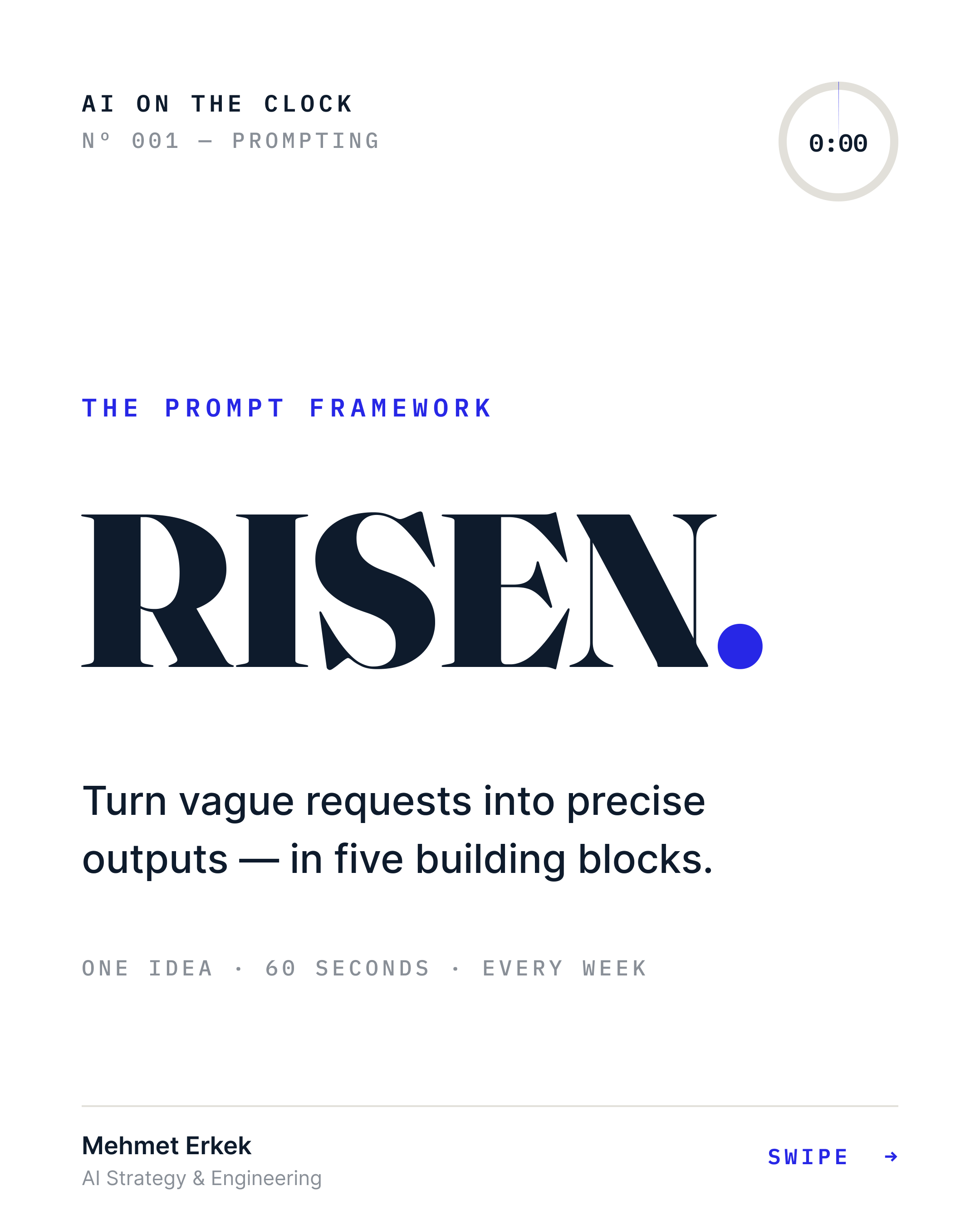
The RISEN Framework: A Repeatable Way to Write Prompts
Role, Instructions, Steps, End goal, Narrowing — five slots that turn prompting from guesswork into something you can hand to a colleague.
Download the deck (PDF, 8 pages) Read the original on LinkedIn
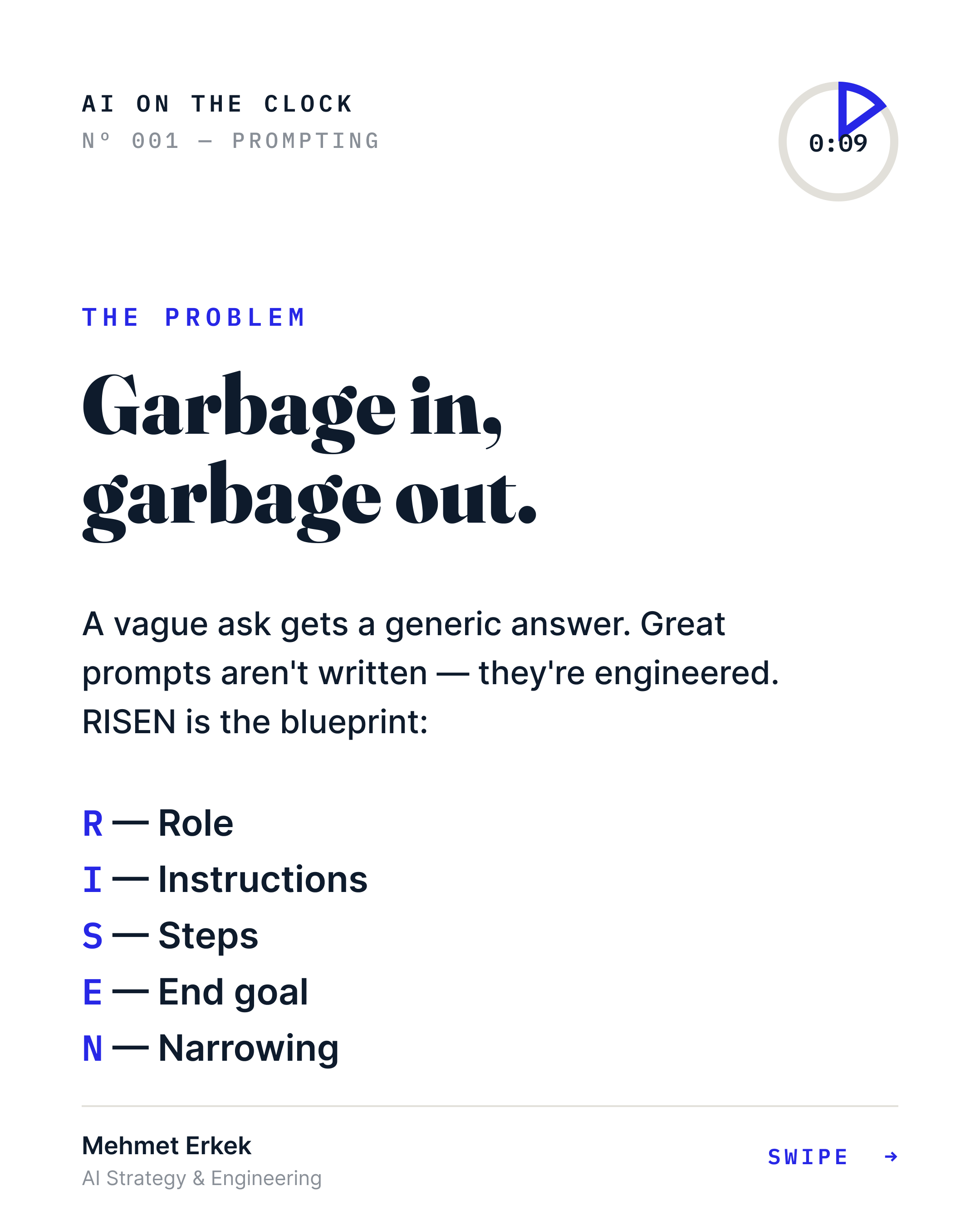
Most prompts fail before the AI even starts. A vague ask gets a generic answer — every time. The model is not the problem; the request is.
RISEN fixes that with five building blocks. Fill all five and you stop negotiating with the output.
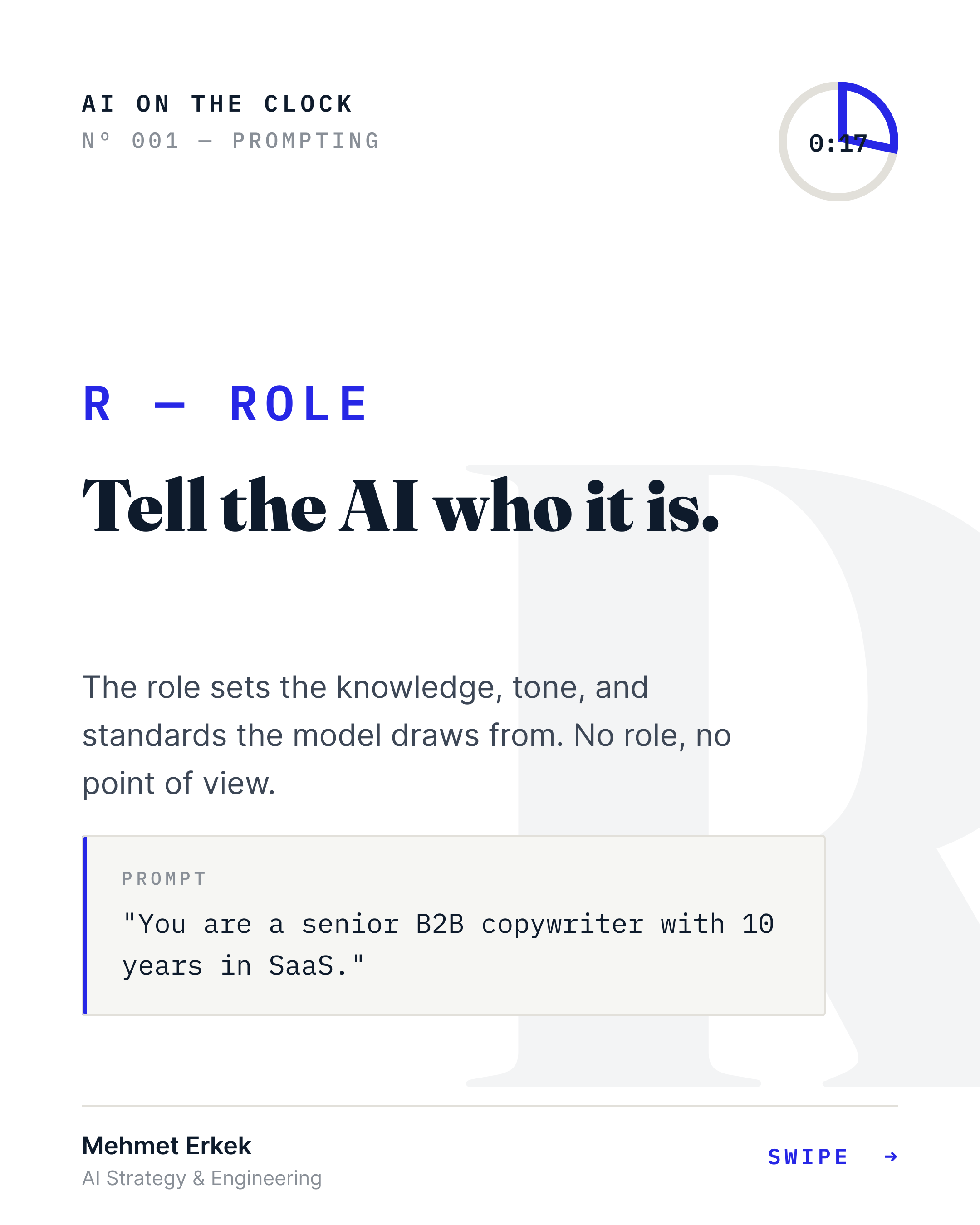
R — Role: tell the AI who it is
The role sets the knowledge, tone and standards the model draws from. No role, no point of view.
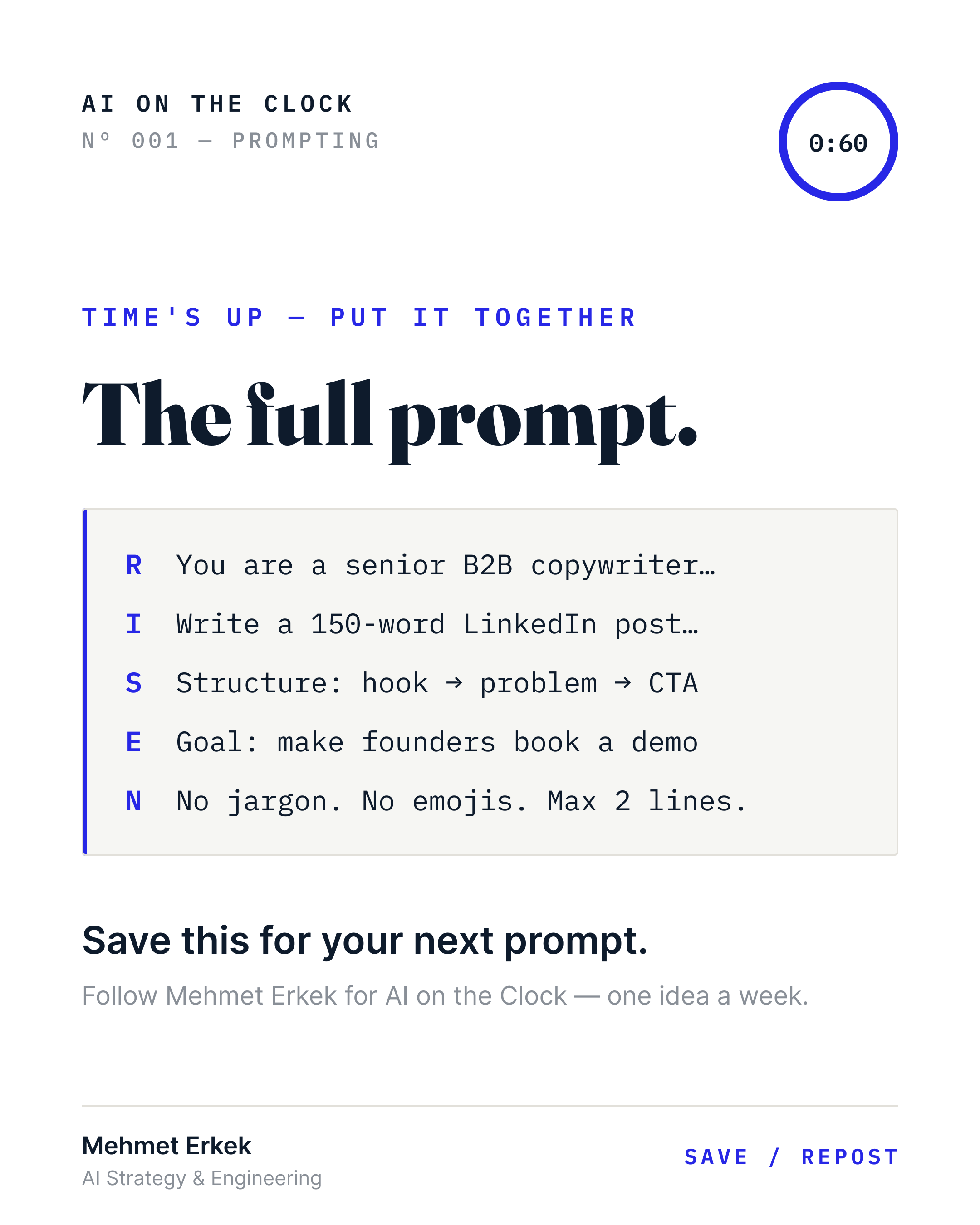
“You are a senior B2B copywriter with 10 years in SaaS.”
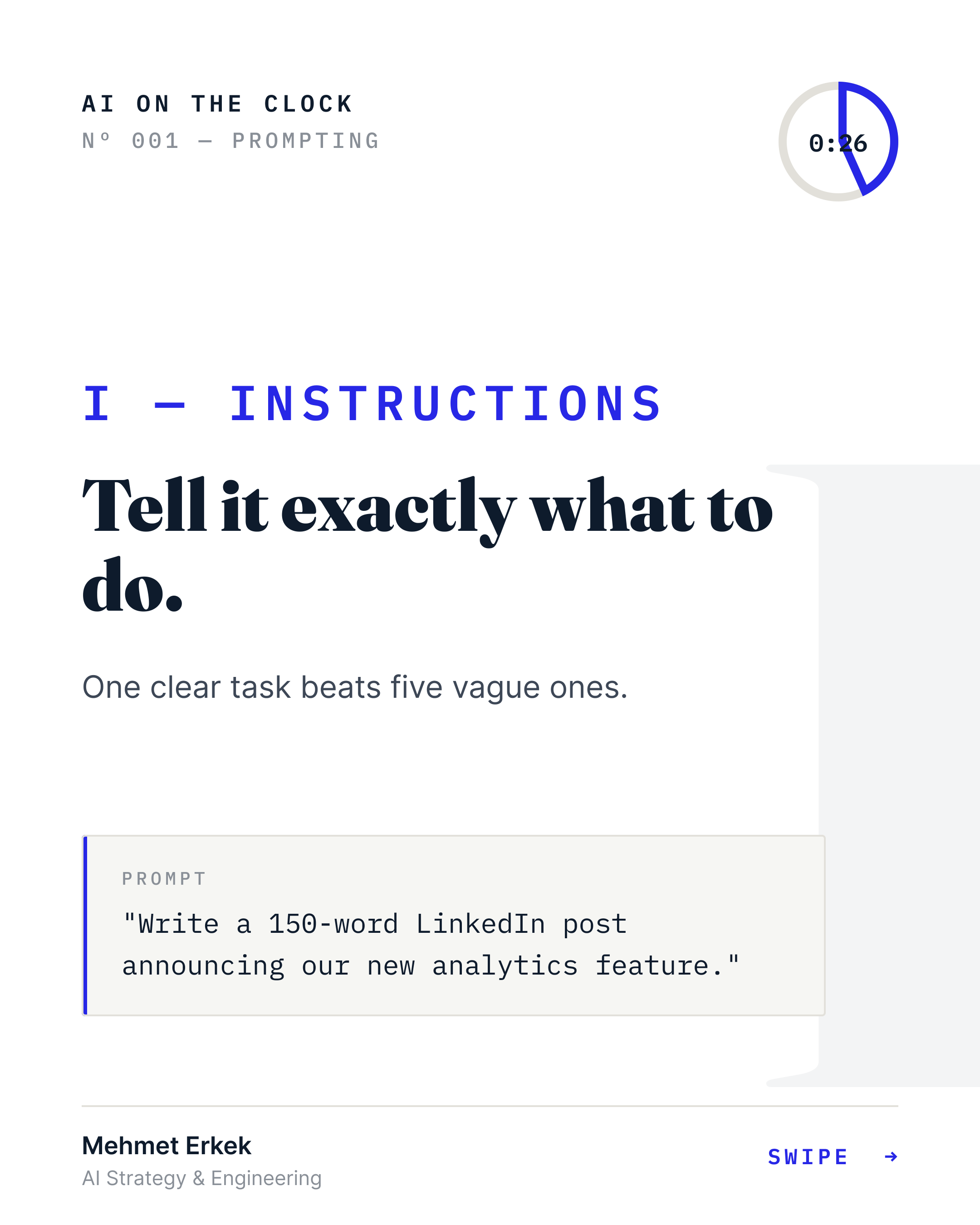
I — Instructions: tell it exactly what to do
One clear task beats five vague ones.
“Write a 150-word LinkedIn post announcing our new analytics feature.”
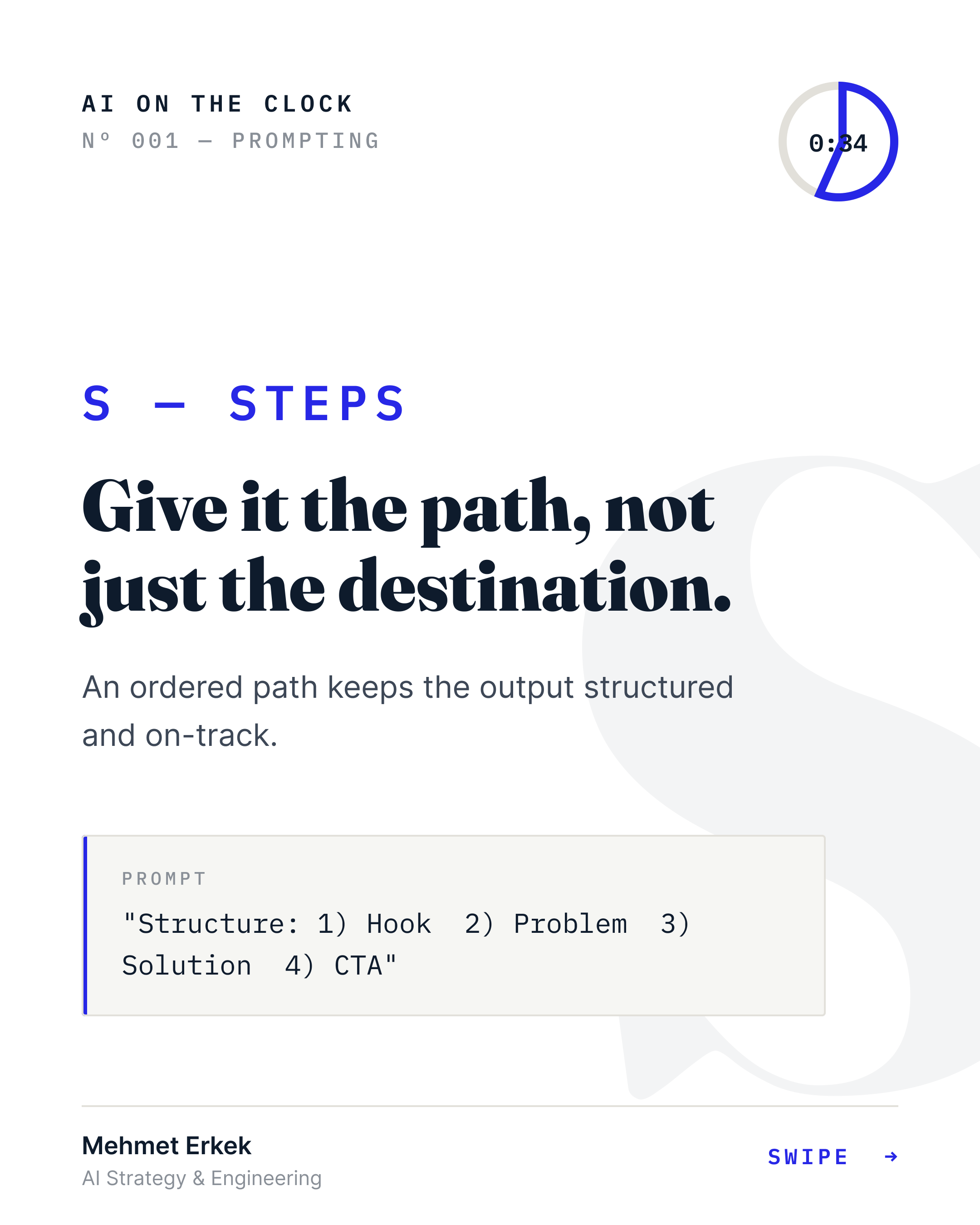
S — Steps: give it the path, not just the destination
An ordered path keeps the output structured and on track.
“Structure: 1) Hook 2) Problem 3) Solution 4) CTA”
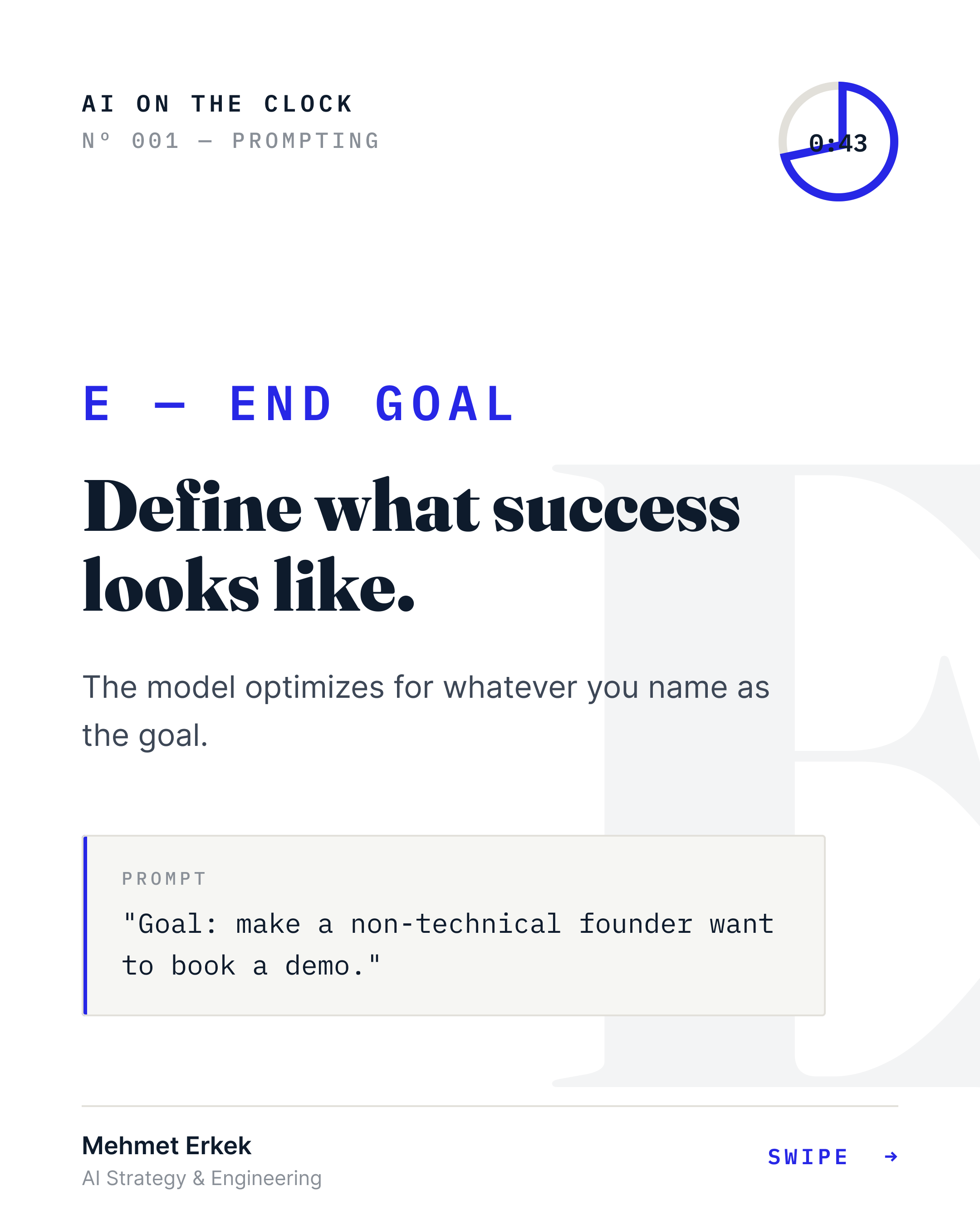
E — End goal: define what success looks like
The model optimizes for whatever you name as the goal. Name it.
“Goal: make a non-technical founder want to book a demo.”
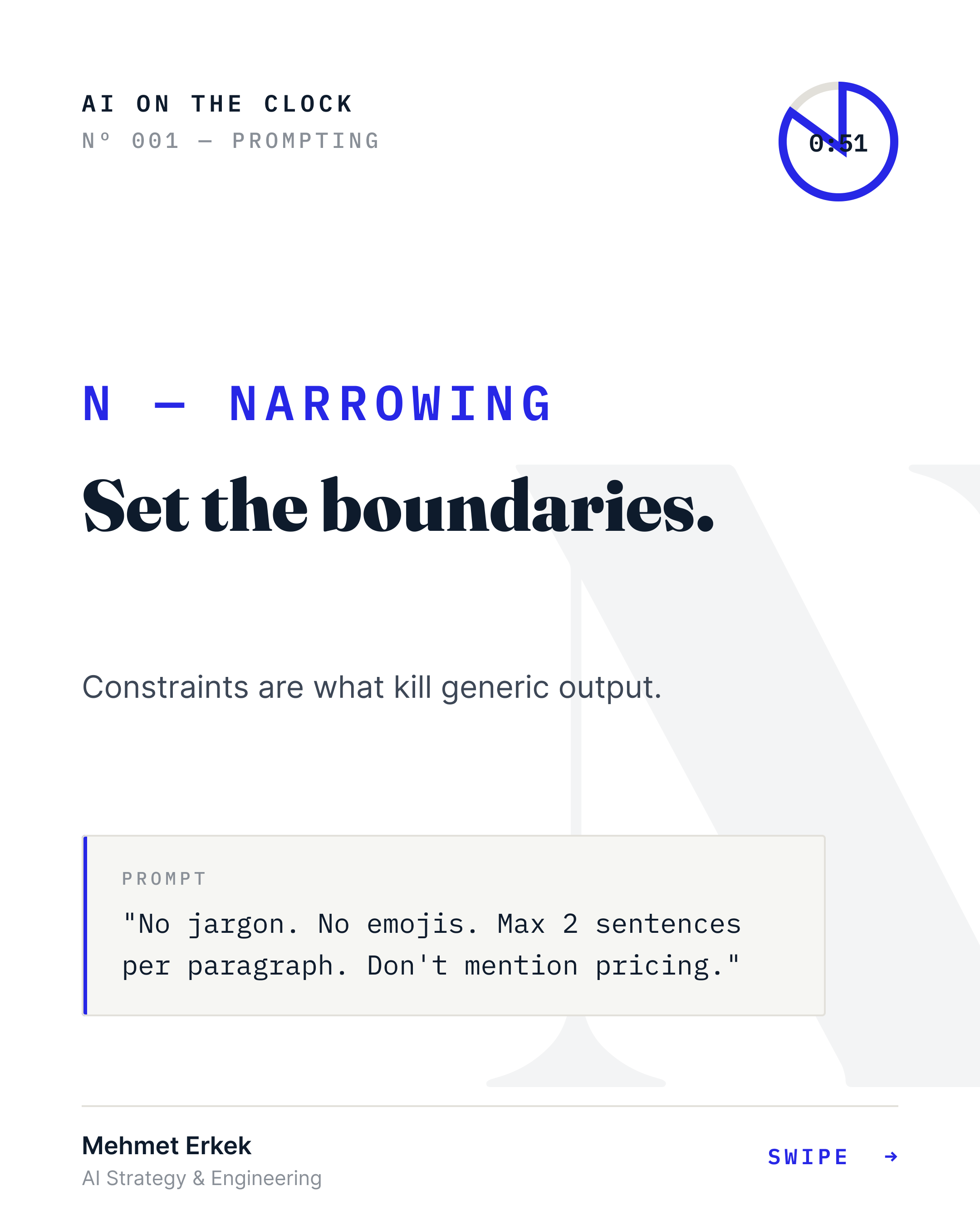
N — Narrowing: set the boundaries
Constraints are what kill generic output.
“No jargon. No emojis. Max 2 sentences per paragraph. Don't mention pricing.”
Why it works
I have watched this single framework turn “write me something about our product” people into “here's exactly what I need” people. The framework is not the clever part — writing the five lines down is. Once they are written, the prompt is something you can hand to a colleague.
The letter most people skip is N. It shows.