Nº 003 · INFRASTRUCTURE · 4 August 2026
What Is MCP (Model Context Protocol)? A Plain-English Guide
Model Context Protocol is an open standard for how AI applications connect to tools and data — the USB-C port for AI. What it is, where it came from, and why it became infrastructure in eighteen months.
Download the deck (PDF, 8 pages) Read the original on LinkedIn
The most consequential development in AI architecture over the past couple of years was not a brighter model. It was a boring standard nobody was talking about — and in eighteen months it went from experiment to infrastructure.
What it is
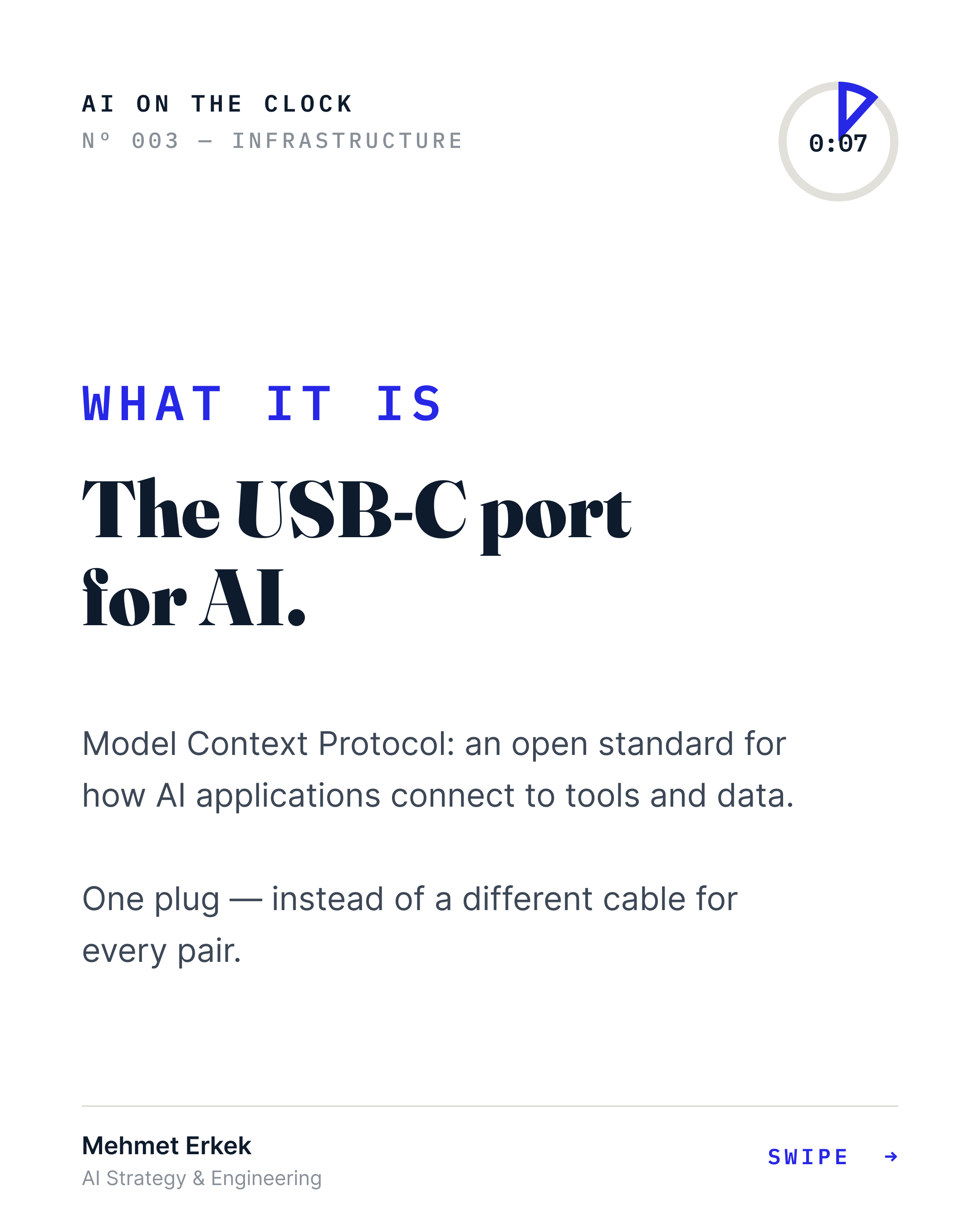
Model Context Protocol is an open standard for how AI applications connect to tools and data. People call it the USB-C port for AI: one plug, instead of a different cable for every pair.
Where it came from
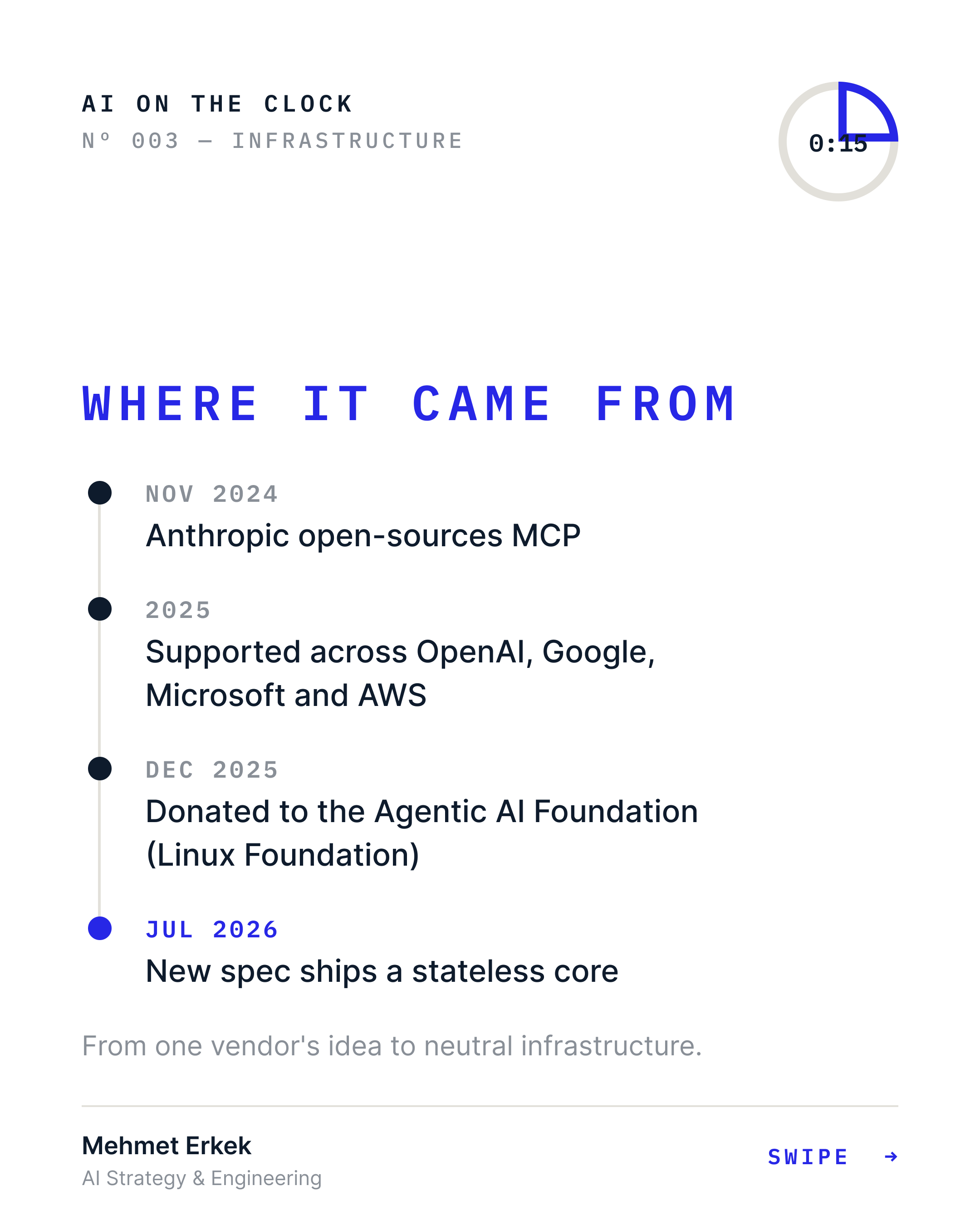
- Nov 2024 — Anthropic open-sources it
- 2025 — supported across OpenAI, Google, Microsoft and AWS
- Dec 2025 — donated to the Agentic AI Foundation under the Linux Foundation
- Jul 2026 — the new spec ships a stateless core
From one vendor's idea to neutral infrastructure in eighteen months.
Why it matters
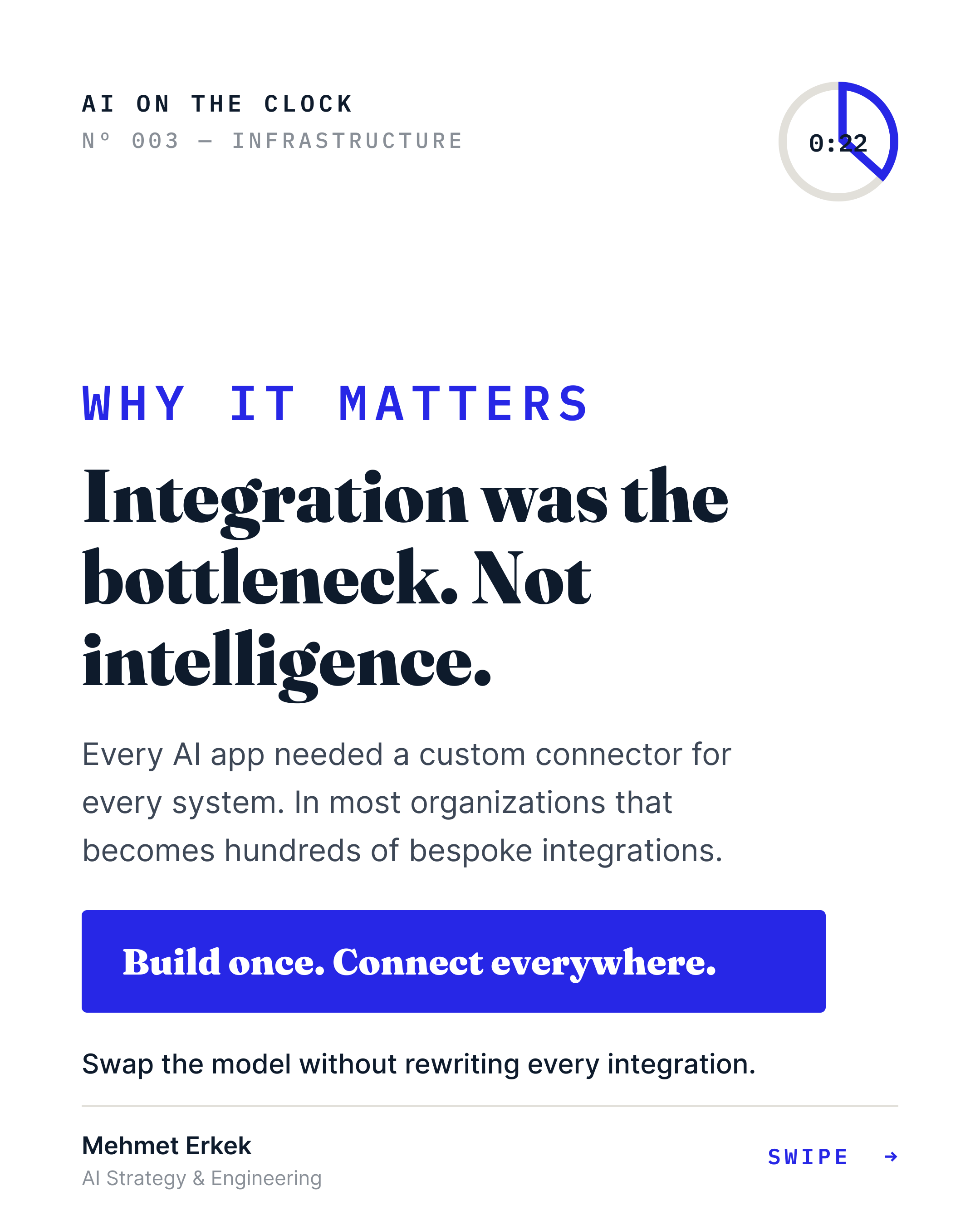
Before MCP, every AI application needed a custom connector for every system. In most organizations that quickly becomes hundreds of bespoke integrations. Integration — not intelligence — was the bottleneck.
There is a second benefit leaders often miss: MCP decouples models from systems. You can change the model without rewriting every integration.
How it works
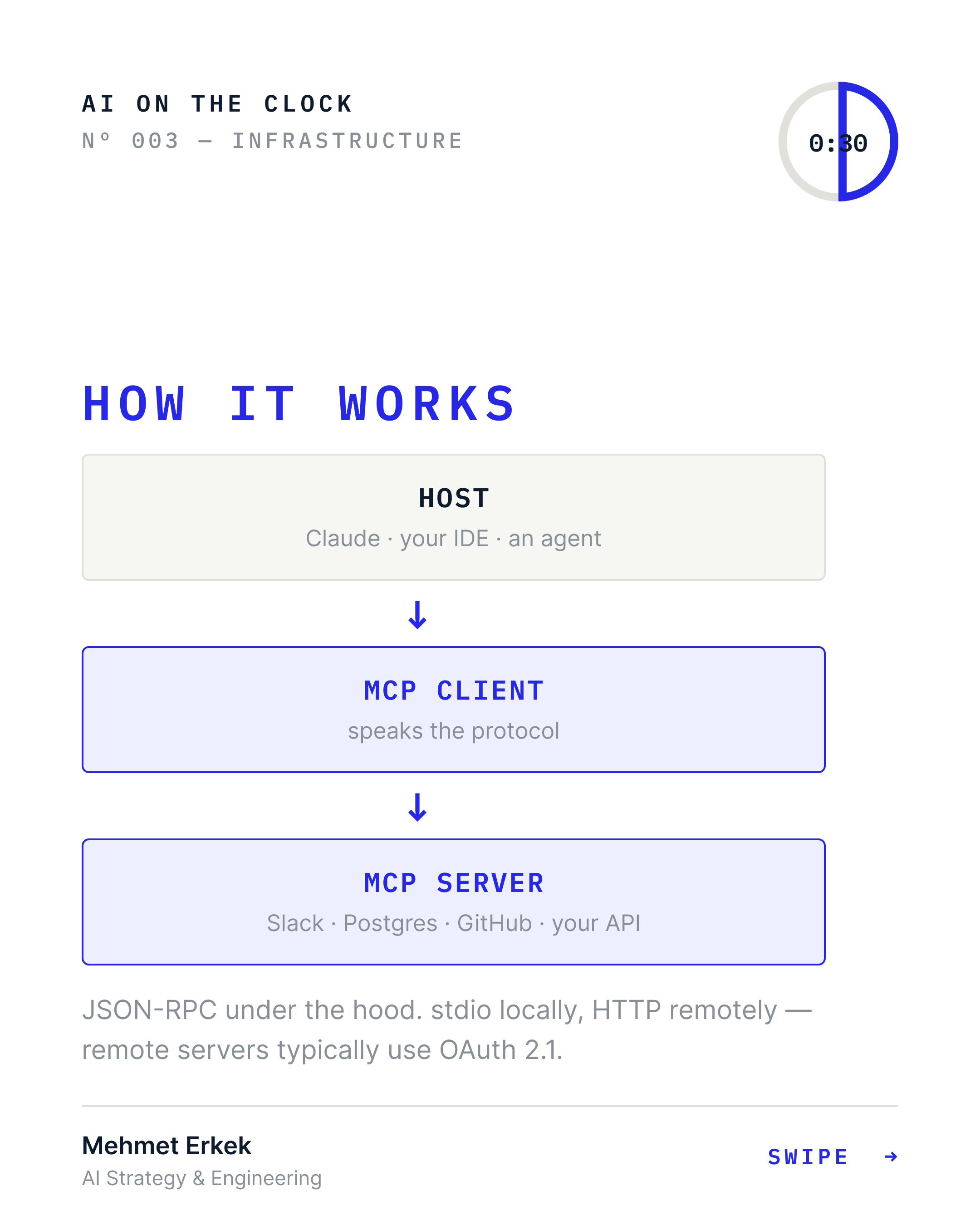
A host — Claude, your IDE, an agent — runs an MCP client. That client connects to MCP servers, which sit in front of your systems: Slack, Postgres, GitHub, your internal API.
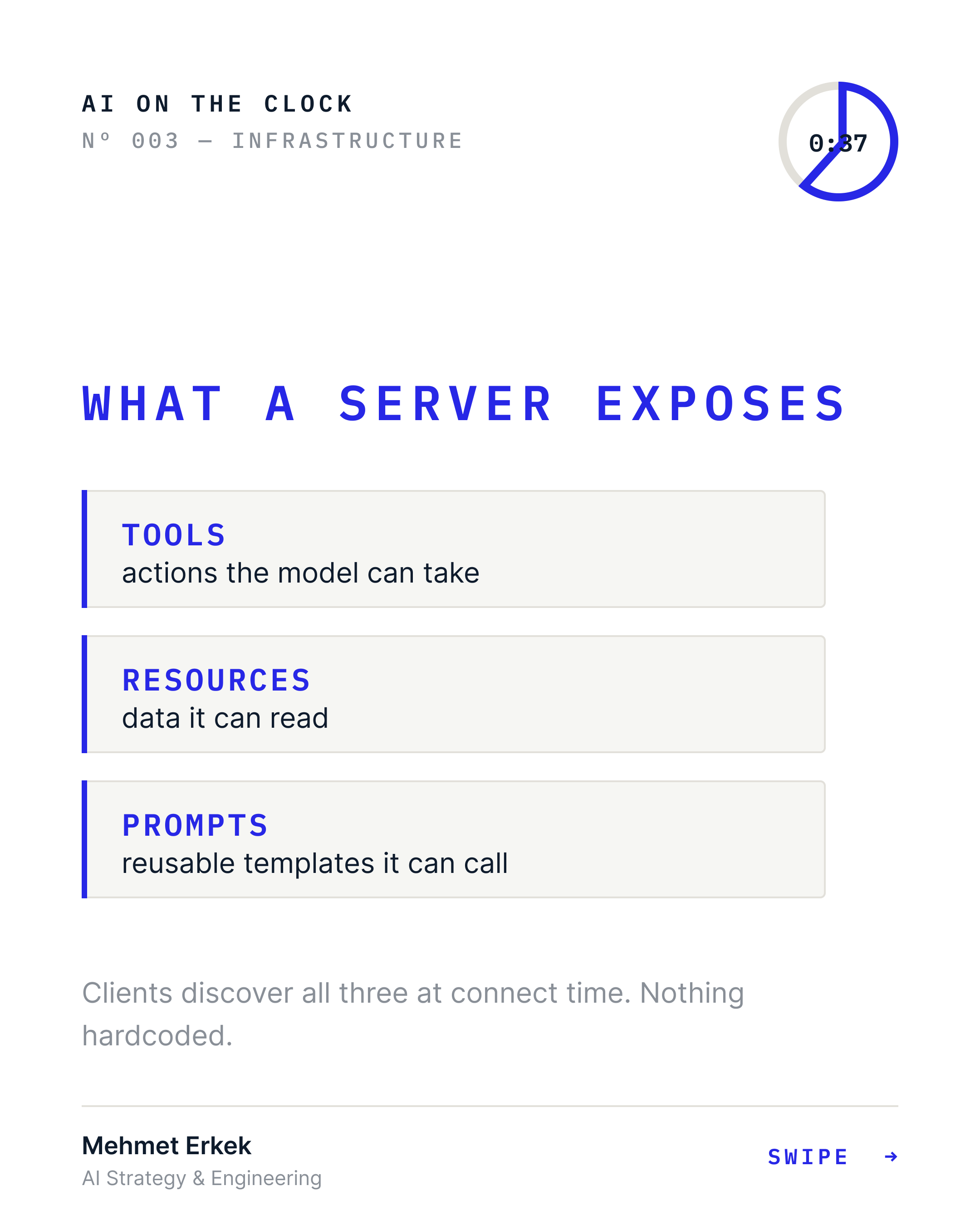
Each server exposes three things:
- Tools — actions the model can take
- Resources — data it can read
- Prompts — reusable templates it can call
Clients discover them at connect time — nothing hardcoded. It runs on JSON-RPC: locally over stdio, remotely over HTTP, with remote deployments typically secured using OAuth 2.1.
Where the world is
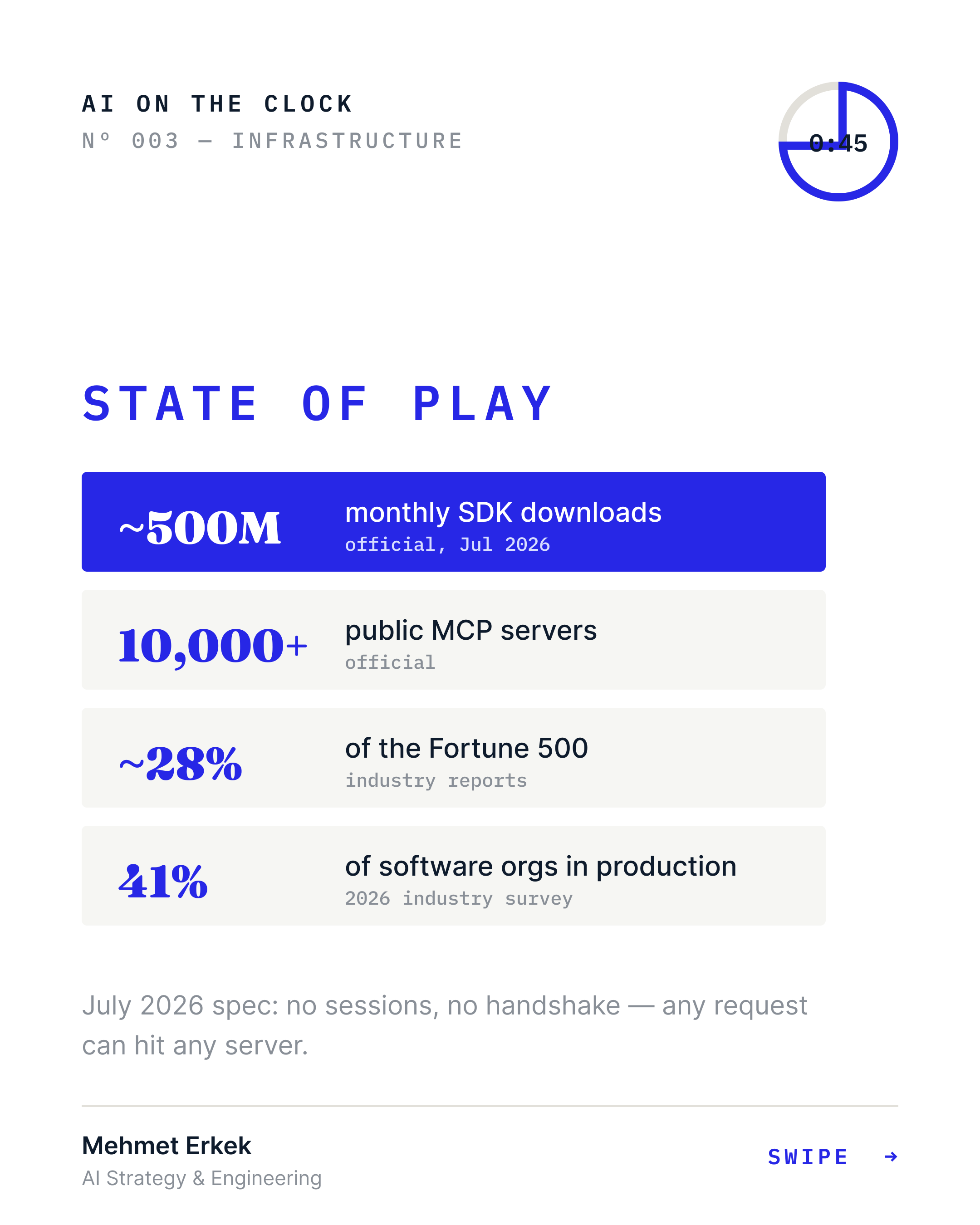
- ~500M monthly downloads across the Tier 1 SDKs (official, July 2026)
- 10,000+ public servers
- ~28% of the Fortune 500 running servers (industry reports)
- 41% of surveyed software organizations using it in production (2026 industry survey)
Only the first two are official project numbers — adoption estimates vary by source. The direction does not.
The July 2026 spec was the biggest release yet: MCP dropped sessions and the initialize handshake entirely. Every request is now self-describing, so any call can land on any server instance behind a plain load balancer. Agent infrastructure finally scales like the rest of the web.
What to do
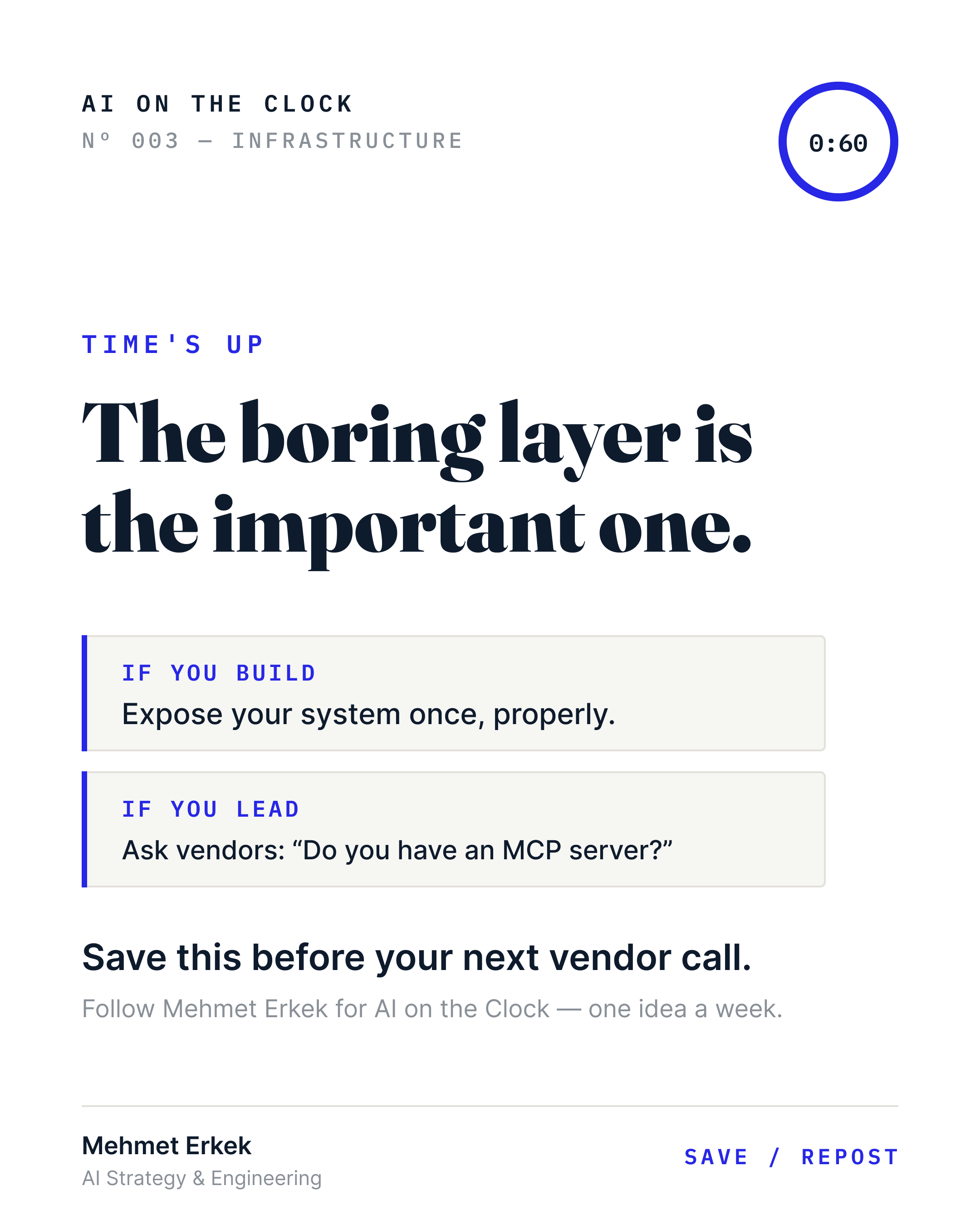
- If you build: stop writing bespoke connectors. Expose your system once, properly.
- If you lead: ask every vendor one question — “Do you have an MCP server?” Their answer tells you how future-proof they are.
Standards don't trend. They quietly decide what's possible.